
How the EU Helps Young Ukrainians with Autism Unlock New Opportunities
15/02/2026
In Ukraine, over 3 million people live with disabilities. This means the state must create a barrier-free environment and ensure everyone feels comfortable living in their own country. Ukraine is not alone on this path, as the European Union actively supports the introduction of new inclusion standards.
As part of the “Together, We Care” campaign, this story features the “KIDDOM” Academy, which helps autistic children learn to understand gestures, speak for the first time, and begin interacting with others.
Kateryna Pashko is raising two children with autism spectrum disorders: 16‑year‑old Maria and 14‑year‑old Matvii. The family lived in Kherson, but had to leave during the occupation. The children switched to online schooling and could no longer attend their regular therapy sessions. Over time, this was compounded by the challenges of adolescence: emotional instability and difficulties with socialisation.
However, after six months of free sessions with new special education teachers and psychologists, the situation changed. “The children became emotionally stable. Their speech, creativity, and communication with other children also developed. For me, the most important thing was to feel once again that we were not alone on this path,” Kateryna shares.
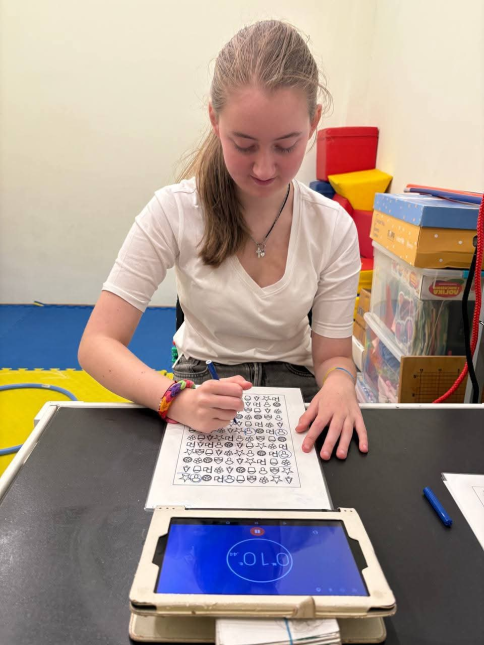
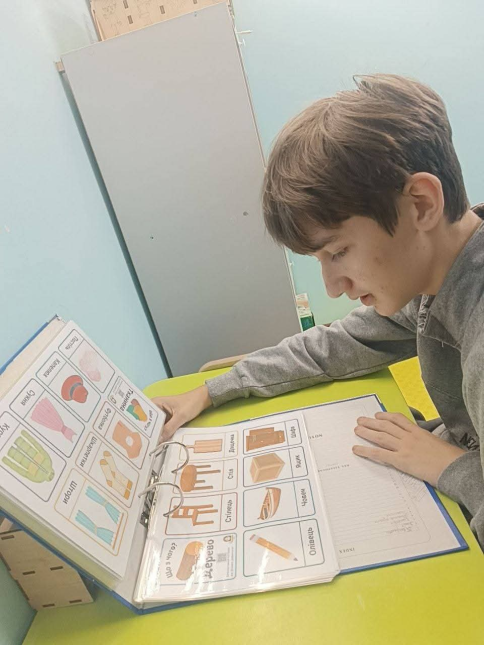
Maria and Matvii Pashko. Photo from the personal archive of Kateryna Pashko.
The family received support at the “KIDDOM” Academy for the development, support, and social adaptation of children.
How the Centre for Children with Developmental Disorders Began
The Academy in Kyiv has been actively operating since 2022. During this time, it has helped hundreds of children with autism spectrum disorders (ASD), cerebral palsy (CP), attention deficit hyperactivity disorder (ADHD), and specific speech and language development disorders.
The institution is headed by Viacheslav Kozak. He is the father of four children, including 12‑year‑old twins who were born with ASD. They now respond when spoken to, follow instructions, and are very active. It was Viacheslav’s personal story that motivated him to open the Academy.
“We wanted to launch back in 2018, but it did not work out. Then the pandemic started. Eventually, we decided to set up the center in a different location, adjacent to the youth library in the Pecherskyi district. When the full‑scale war began, we had a huge advantage because we could continue classes. Several times, missiles fell nearby, but the children in the bomb shelter did not hear them,” Viacheslav recalls.
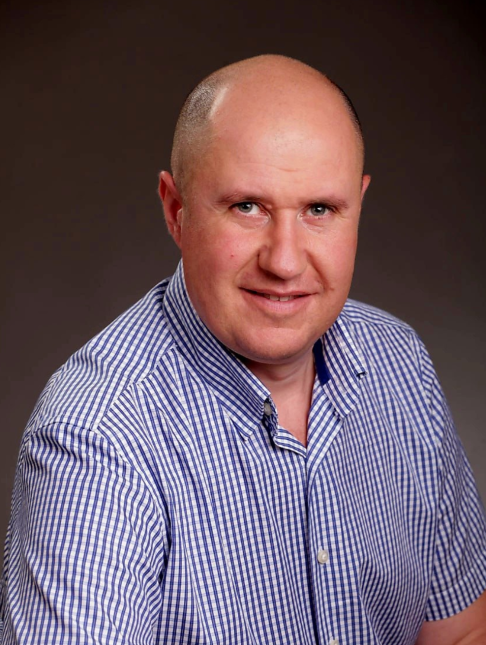
Viacheslav Kozak. Photo from the Facebook page of the “KIDDOM” Academy.
The Academy is a nonprofit organisation, so it is constantly seeking donors to support its ongoing work. In 2024–2025, it received support from the Charity Organisation “100 Percent Life Network Rivne,” which won a grant from the European Union. After a competitive selection process, the funds were directed to support “KIDDOM.”
As a result, 53 children with developmental disorders from internally displaced families or military families completed free sessions with specialists, while parents attended individual consultations, training events, and sessions with psychologists.
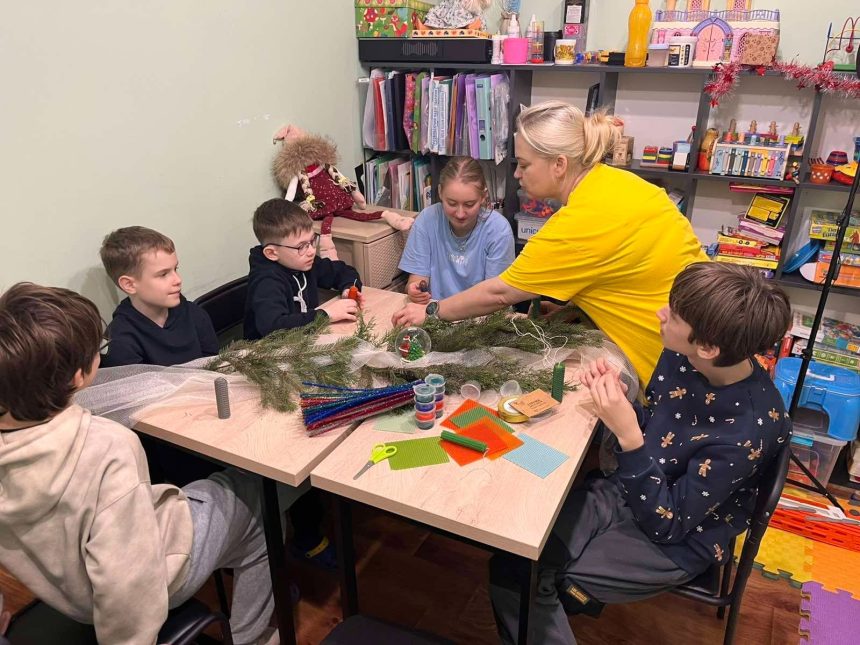
Illustrative photo from the Facebook page of the “KIDDOM” Academy.
A “Window of Opportunity” for Children with ASD
Over 220 families have already received support at “KIDDOM.” Viacheslav recalls how one little boy demonstrated the impact of the sessions at the most unexpected moment: “During the closing conference, little Mysha started running around and getting anxious, as his mother was speaking and could not attend to him. Speech therapist Liudmyla took a tablet with the TippyTalk app [an application that helps people with communication disorders express themselves through pictures – ed.], and Mysha was able to show what he needed.”
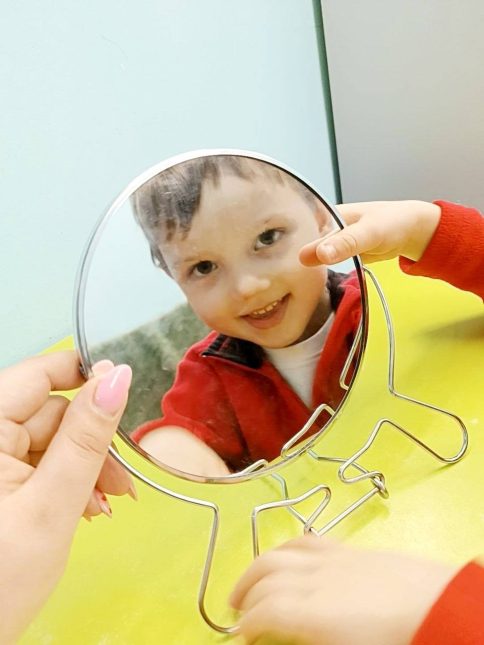
Illustrative photo from the Facebook page of the “KIDDOM” Academy.
With the support of the European Union, students of the Academy could attend up to 400 sessions with special education professionals. This is a unique number, since similar programmes usually cover up to 50–100 sessions, while 75% of children with ASD, according to Viacheslav, need ongoing support. “It was this European project that made a significant contribution to supporting such families. We can say that the children received very intensive rehabilitation and benefited greatly from this project,” he adds.
Viacheslav calls his team’s work a “window of opportunity.” He says the Academy has many stories of children who, after attending the programme, were able to start studying in mainstream schools.
One of them is Sashko Mitsul. Previously, the boy barely communicated with his peers, could not stay in a room with several people for long, and did not express his emotions. After the course, he became more emotionally stable, developed an interest in learning, and his family began to better understand his needs.
“We were pleased to join the project. Sashko learned to speak coherently and answer questions. His speech improved, as did his finger coordination and fine motor skills. He attended kindergarten and later transitioned to a mainstream school. Every small step Sashko took was a joy for us. We are truly grateful to all the specialists,” says the boy’s grandmother, Iryna Mitsul.
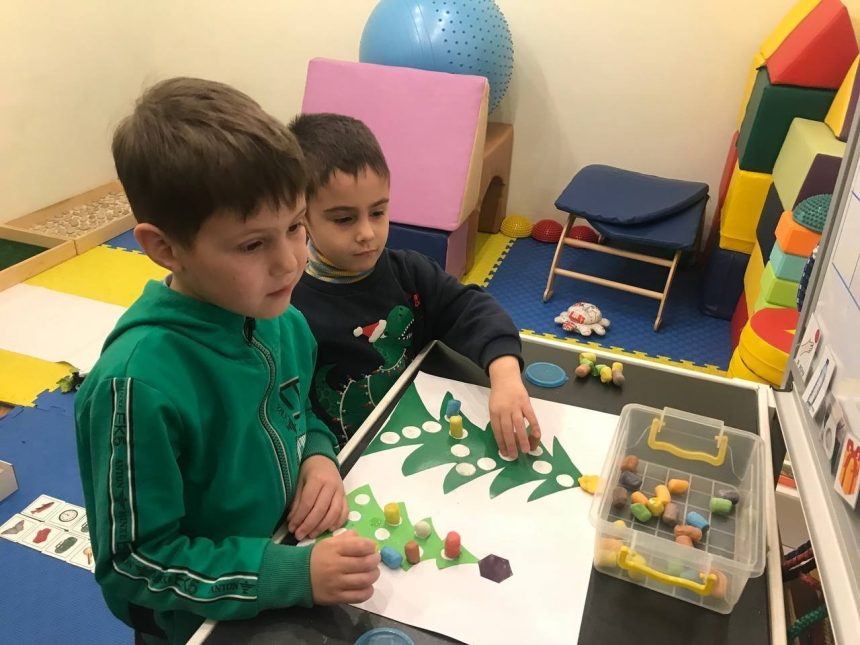
Illustrative photo from the Facebook page of the “KIDDOM” Academy.
Yet, with professional support, children with developmental disorders can do more than attend mainstream school. In adulthood, many of them are able to work and earn a living. One effective step towards their integration is supported living, where people work (for example, at a workshop or bakery), live independently, but receive assistance with everyday life and socialisation.
Although this model still needs to be scaled across Ukraine, some progress has already been made. The government is currently working on implementing the European Child Guarantee – an EU initiative aimed at ensuring that children from vulnerable groups have access to basic services and face fewer risks of social exclusion. All this is part of the shared vision of Ukraine and the European Union: building a society where inclusion is the norm, not the exception.
Source: Life Pravda