
IDPs with disabilities? Help is available in Vinnytsia!
10/02/2026
When the full-scale invasion began, the Vinnytsia-based NGO “Parostok” decided that its mission was now to support both Vinnytsia residents with disabilities and families of internally displaced people with disabilities who had found shelter in the region. The European Union helped make this possible.
Olena Ivanochko, 69, has a disability. Before the full-scale war, she lived in Kostiantynivka in the Donetsk region, and in November 2022, she evacuated to Vinnytsia.
Olena became one of the more than 43,000 displaced people welcomed by Vinnytsia. Among this number, over 2,000 people have disabilities. Adapting to a new place is not easy — and for people with disabilities, it is an even greater challenge. This is well understood by the NGO “Parostok”, which has been supporting people with disabilities in Vinnytsia and its surrounding communities for over 26 years. Its leaders, Iryna Sarancha and Anastasiia Lishchynska, also have disabilities, so they know from personal experience the barriers they have to confront almost every day.
In the autumn of 2022, the Parostok team opened a humanitarian hub, funded by the European Union, for people with disabilities who are displaced in Vinnytsia. The centre now supports over 500 IDP families and 70 local residents with disabilities. Olena Ivanochko enjoys visiting the hub: “I feel at home here. I love the people who come here and those who take care of us.”
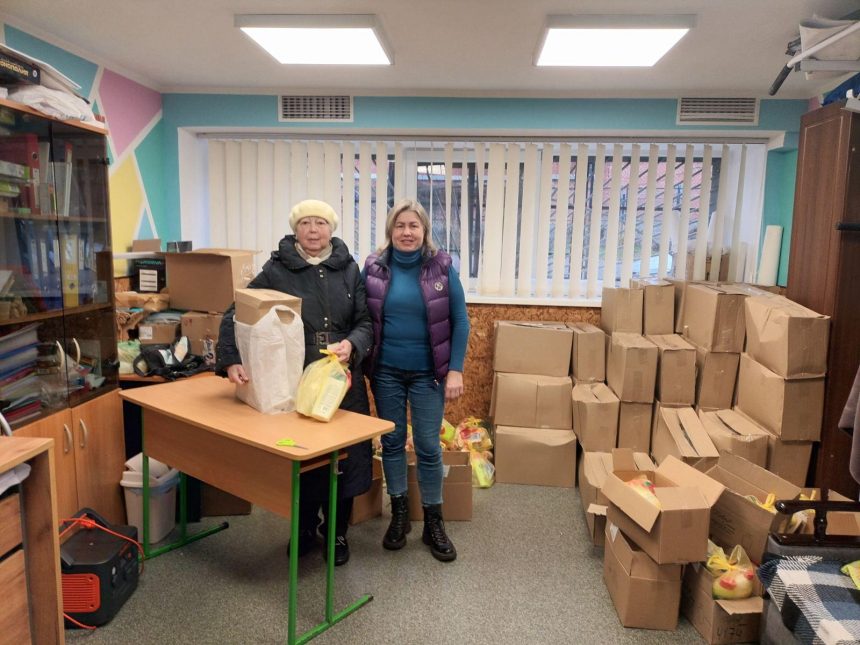
Olena Ivanochko (left); photo provided by the NGO “Parostok”.
Last year, with the support of the European Union, the hub implemented a project that enabled 85 families to access social services and ease their psychological burden.
First, the team surveyed people and found that many of them needed help with laundry and clothing repairs. In dormitories and collective centres, there are often no washing machines or places to dry clothes, and items received as humanitarian aid frequently require hemming or mending. As a result of these needs, a laundry and a sewing workshop were opened at the hub. Over the year, more than 1,500 everyday services like these were provided there.
“I constantly use the sewing machine. I am allowed to work independently, and I hem clothes with my own hands,” says Liliia Bazylyeva from Kherson, who moved with her family to Vinnytsia after the de-occupation of her hometown.
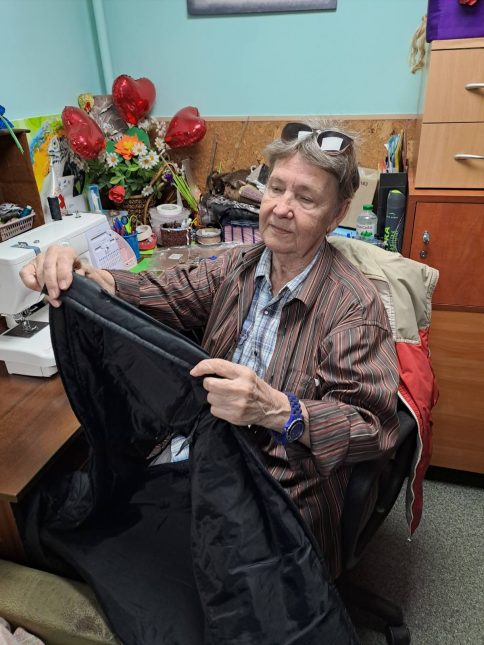
Liliia Bazylyeva; photo provided by the NGO “Parostok”.
The hub also ran a 192‑hour digital literacy course for older women. Lyudmila Yatskiv from Bilozerske in the Donetsk region learned to use a smartphone fully, access news, and obtain online services. Tetiana Malysheva from the de‑occupied Kherson region shares a similar success: “I was able to register on Diia and apply for compensation for damaged property in the Kherson region.”
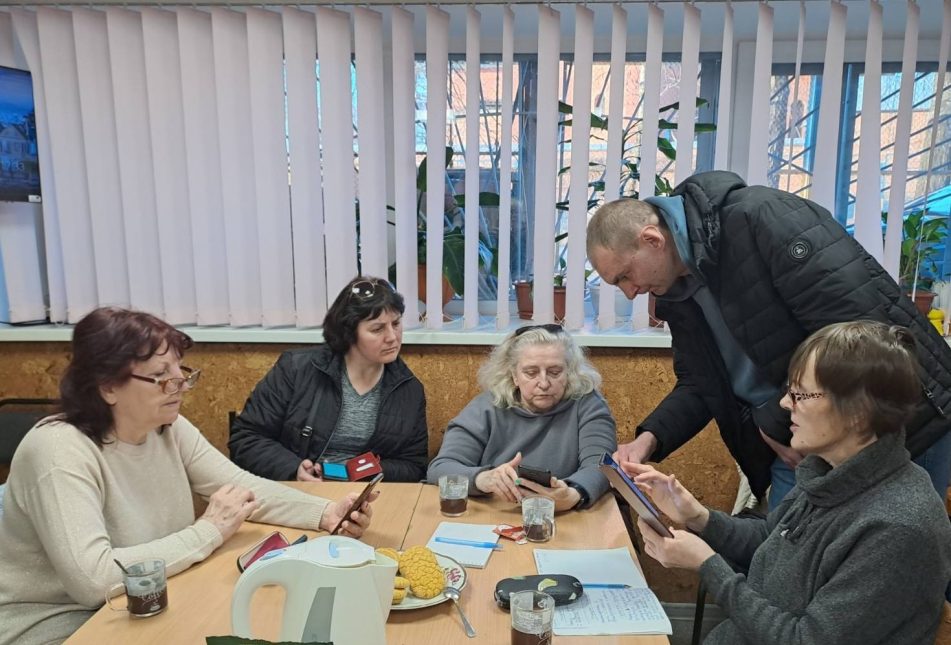
Digital literacy course; photo provided by the NGO “Parostok”.
As part of the project, 20 displaced people with severe musculoskeletal conditions received social support over a six‑month period. Each of them was assisted by a social worker who helped with cleaning and cooking, accompanied them to public institutions and cultural events, and so on.
The hub also ensured psychological support. It organised meetings on coping with negative emotions and stress. Children from displaced families attended 15 art therapy workshops. “These activities combined art therapy, psychological support, and socialisation. First, we held workshops on three topics: soap making, creating traditional motanka dolls, and Ukrainian souvenirs. And at the end, we had tea with treats, during which the children talked and shared their feelings,” recalls hub coordinator Anastasiia Lishchynska.
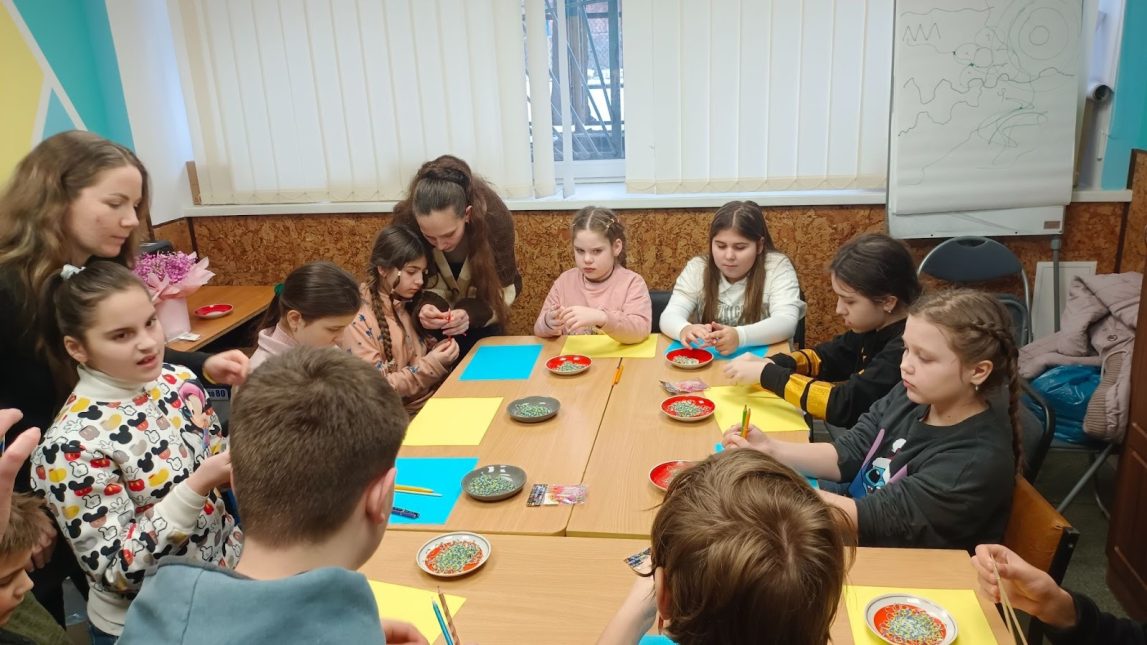
Workshop for children from IDP families; photo provided by the NGO “Parostok”.
Once a quarter, visitors to the hub received food packages and hygiene kits. “There were no queues — I came at the appointed time and received everything quickly. At the beginning of the full‑scale invasion, I forgot what it meant to smile. When I came to Parostok, I started laughing again and talking a lot. I found friends who I miss if we do not see each other for a long time,” shares 68‑year‑old Tetiana Topchii from Svatove in the Luhansk region.
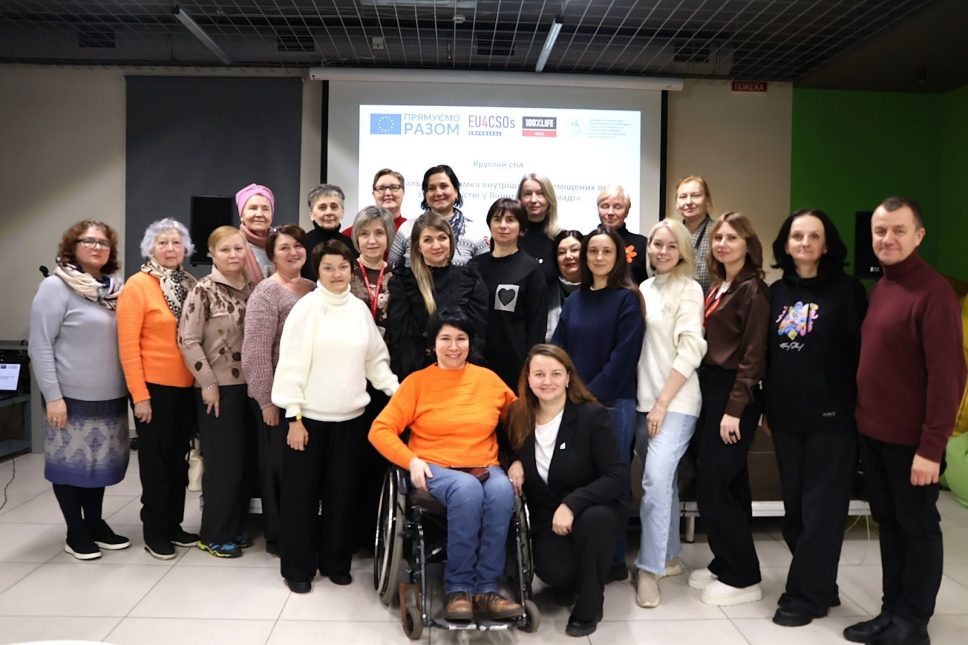
Roundtable with local authorities, civil society activists, and displaced people; photo provided by the NGO “Parostok”.
Beyond supporting displaced people with disabilities, the European Union also helped “Parostok” strengthen its voice in cooperation with the local authorities. The organisation’s head, Iryna Sarancha, recalls: “I took part in a strategic session held by the Department of Social Policy on the development of social services in the Vinnytsia region. After this project, we began to be considered a strategic partner, and our input started to be considered.”
Inclusion and civic participation are among the core values embodied by the European Union. These principles are helping build a society of equal opportunities in Ukraine — one where, in times of hardship, people are not left alone with their problems, but can rely on the support of caring people nearby and assistance from European partners.
Source: I-VIN.INFO