
An Inclusive Supported Living Facility Has Been Opened in Chernivtsi
15/02/2026
All his life, 28-year-old Serhii Martiianov has lived in psychoneurological institutions. At first, he stayed in Zaporizhzhia oblast, but after the start of the full-scale war, he and other residents of the psychiatric facility were evacuated to Bukovyna. A year later, when Serhii was offered the chance to move into the supported living house “Oselya Sadhora,” he agreed immediately.
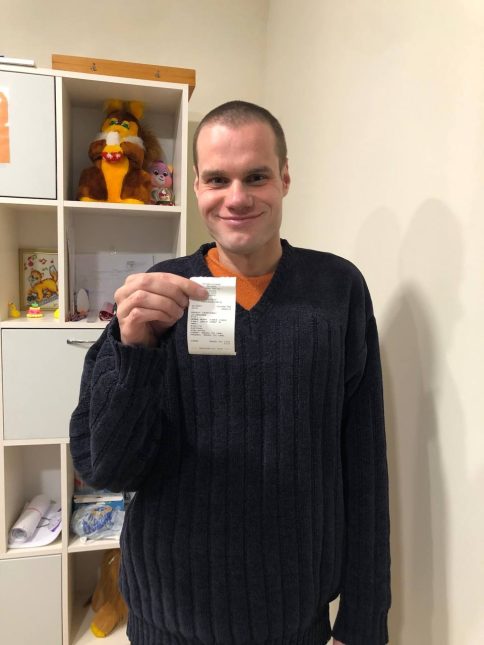
Resident Serhii at the house. Photo from the Oselya Sadhora archive.
A supported living house is a place where adults with psychosocial disabilities who grew up in residential institutions learn to live independently. It is an alternative to institutions where it is extremely difficult to develop basic self-care skills.
It was at “Oselya Sadhora” that Serhii learned how to cook and clean, plan his daily routine, and also found a job. The house was opened in 2024 in Chernivtsi as part of the flagship partnership between the United Nations Development Programme and the European Union, “EU4Recovery – Empowering Communities in Ukraine.” The house was built on the premises of the regional centre for social and psychological assistance; the premises were renovated, furniture and household appliances were purchased, and an inclusive outdoor recreation area was established nearby.
There are currently eight residents living in Oselya Sadhora: six women and two men. The number of residents meets the standards for supported living. Four social workers help them develop household and social skills.
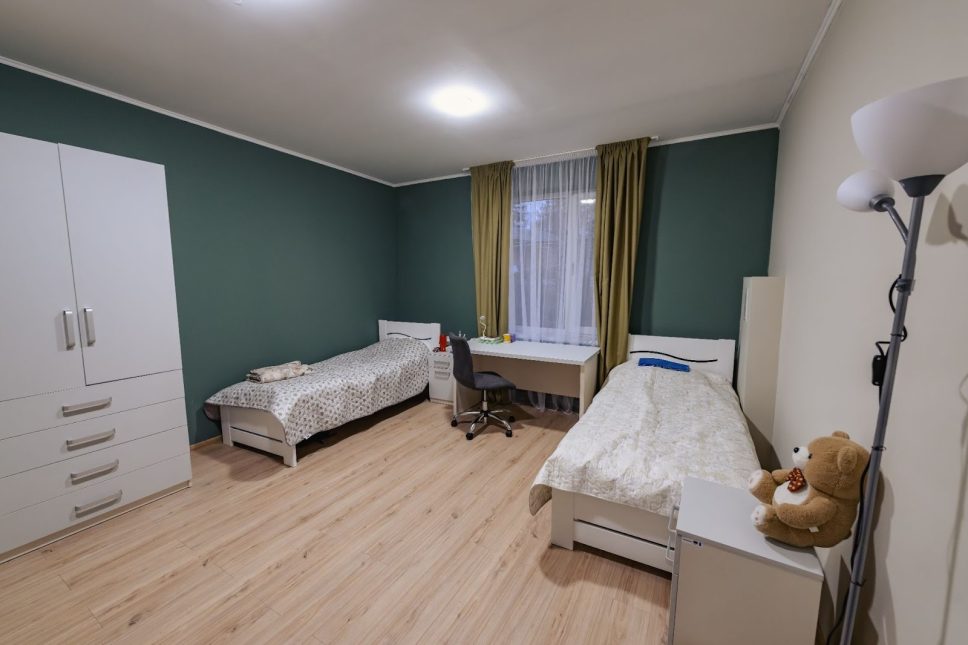
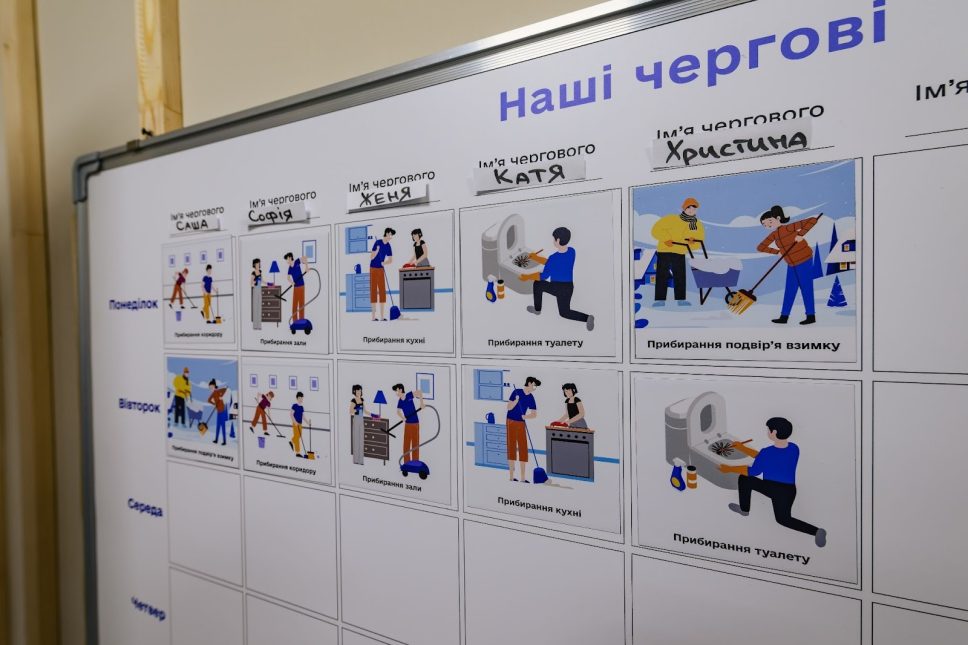
Photo: Artem Hetman / UNDP in Ukraine
“Supported living is a social service. Specialists teach residents how to cook, do their laundry, use ATMs, find a job, buy groceries, and plan their day. In an institution, there is a fixed schedule with breakfasts, lunches, and dinners. Here, they are taught to live independently,” explains the director of the house, Anatolii Khomik.
One staff member at “Oselya Sadhora” has taught the residents how to bake pies and cakes, while another has shown them how to care for plants. With funding from the European Union, a greenhouse was also set up next to the house, where they grow cucumbers, tomatoes, and herbs. The vegetables are preserved for the winter, and the flowers are used to decorate the home. “It is important for them to see that every action leads to a result,” the director notes.
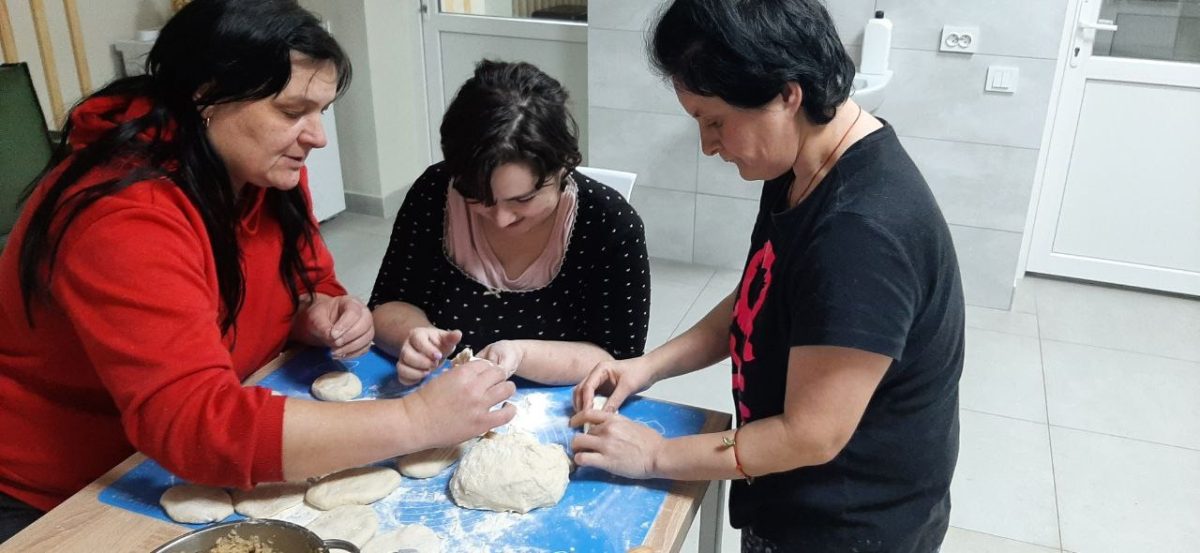
Photo from the “Oselya Sadhora” archive
Each new skill helps the residents of the house better understand their abilities and trust themselves and the specialists more. Supported living teaches them to interact with others and resolve conflicts, enabling them to build relationships, rent housing independently, work, and become part of the community.
The cost of living in the centre is covered by the regional budget for local residents, while displaced people receive assistance from the state. At “Oselya Sadhora”, residents sign a one-year contract. “This is to keep them motivated to move forward,” notes Anatolii Khomik, adding, “It does not mean that in a year they will end up on the street. With these contracts, we motivate them to change something in their lives.”
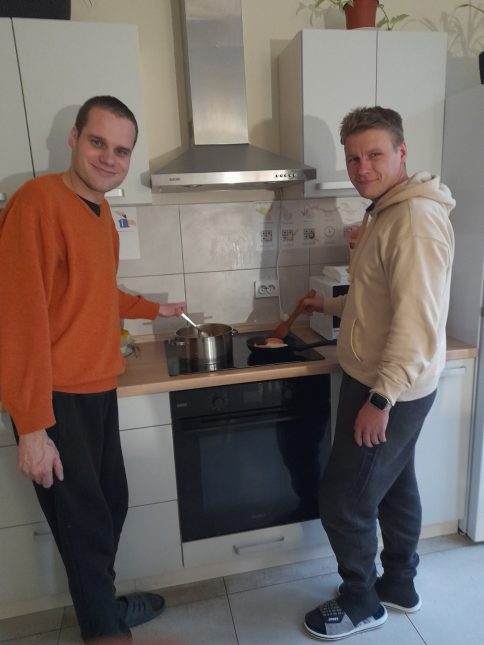
Residents of the house, Serhii (left) and Fedir (right). Photo from the “Oselya Sadhora” archive.
“Living independently is better. I go to the city for walks. I did not have this opportunity in the institution. We were not allowed to go out, and no one took us on excursions, walks, or to the doctor. Now I live independently: I buy groceries and cook for myself. I was able to get a job, and I also like this very much,” Serhii shares. He now works as a second watchman at “Oselya Sadhora”, substituting for other guards when needed. He enjoys the job, knows his schedule, and looks forward to his shift, as do the other residents of the house.
Fedir bakes bread, while Yevheniia helps the hostel administrator, cleans entrances, and dreams of becoming a blogger. Khrystyna likes embroidering with beads. Earlier, she decorated shirts to order, then learned to sew, and now creates items from scratch. Kateryna, like Fedir, works in a bakery. “If such a social service had previously been provided at the community level, Kateryna and Khrystyna would have been living independently long ago, with a family and a home,” the director of Oselya Sadhora is convinced.
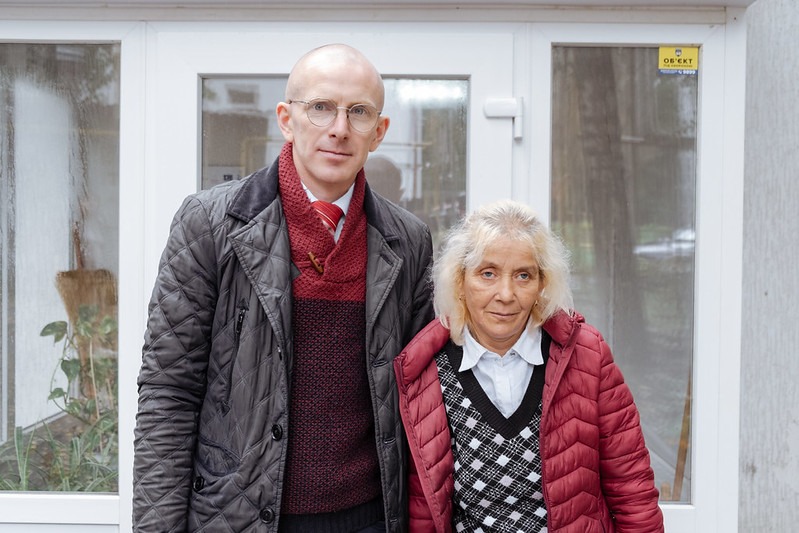
Director of “Oselya Sadhora”, Anatolii Khomik, and its resident Kateryna. Photo: Olesia Saienko / Reporters / UNDP in Ukraine.
“Ukraine aspires to join the EU, where human dignity is the highest value and the source of rights and freedoms. Residential institutions, in fact, deprive people of choice. Supported living, on the other hand, enables independent living: walking around the city, attending cultural events, and taking part in community life. This service is an alternative to closed institutions for people with disabilities. It is not about guardianship, but about social support so that a person can independently manage everyday tasks (self‑care) and interact with society, contributing to the community,” summarizes Anatolii Khomik.
In 2009, Ukraine ratified the UN Convention on the Rights of Persons with Disabilities, which, in particular, guarantees the right to independent living. However, to achieve this, Ukraine must reform its residential institutions. The transition from residential institutions to community-based support for people with disabilities is also one of its obligations under the EU-Ukraine Association Agreement.
There has already been initial progress in this area. At the end of 2024, the Government approved the Strategy for the Reform of Psychoneurological and Residential Institutions, which provides for the closure of psychoneurological institutions by 2034. Instead, the state must create conditions for independent living for people with disabilities who currently reside in such institutions.
The supported living service is a key tool for implementing this strategy. The European Union is helping Ukraine to scale up its implementation, and the support for “Oselya Sadhora” demonstrates this systemic cooperation in practice. For the EU, inclusivity is a core value and a precondition for developing human and economic potential, which is why European partners consistently support inclusive projects in Ukraine.
Source: Life Pravda