
“Standing Strong Yourself, Lift Another”: How EU Support Helps Develop Women’s Leadership in Odesa Region
15/02/2026
Hanna Szymanska, Head of the NGO “Women of Bessarabia,” is convinced that for communities to thrive and grow, they need active individuals who create opportunities and prospects for young people. International partners, in particular the EU, help make such initiatives a reality.
In small communities, young people often struggle to fulfil their potential. They do not know how they can change their towns and villages or how to implement their own ideas for the benefit of others. This is clearly felt in the Bilhorod-Dnistrovskyi district. Searching for a better life, young people leave not only for Odesa or Kyiv, but also for neighbouring Moldova and Romania.
Life exists where there is the prospect of development, Hanna Szymanska believes. That is why, in 2022, she, together with Nataliia Strezeva, an internally displaced woman from the Mykolaiv region, founded the NGO “Women of Bessarabia”. The organization focuses on supporting women from communities in the Bilhorod-Dnistrovskyi district, guided by the principle: “If you are standing strong yourself, lift at least one more woman.” It was also when the idea of creating mobile schools – known as the “Boot Camp for Girls” – emerged.
“Our mission is to offer girls an alternative way to live their lives. To give them an understanding that they can have an impact on their community, their peer group, their school, and their country. We are delighted to see what an amazing, empathetic generation of young women is growing up to support us and eventually take over from us,” Hanna shares.
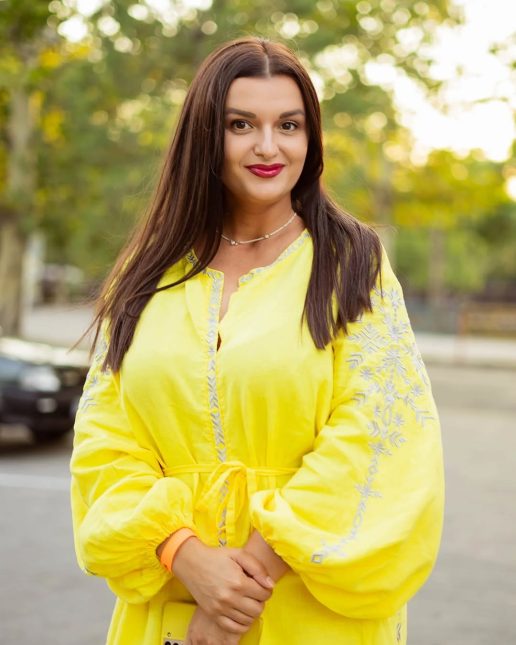
Hanna Shymanska. Photo from Hanna’s Instagram page
After a long fundraising period, the women implemented their initiative within the “Unity for the Community” project, carried out by ISAR “Yednannia” with the support of the European Union.
The boot camp began in July 2025 and combined training in leadership, safety, communication, and self‑realization. For example, coach and business trainer Zhanetta Kolymba, who works with entrepreneurs and helps people define their professional path, taught the girls to set realistic goals and build clear plans. Co‑founder of the recruiting and consulting agency GrowVision Yuliia Tatenko focused on helping them work more effectively in a team and find joint solutions. In addition, a psychologist conducted individual sessions, medical professionals conducted a first-aid course, and meetings were held with village heads to foster dialogue between young people and local authorities.
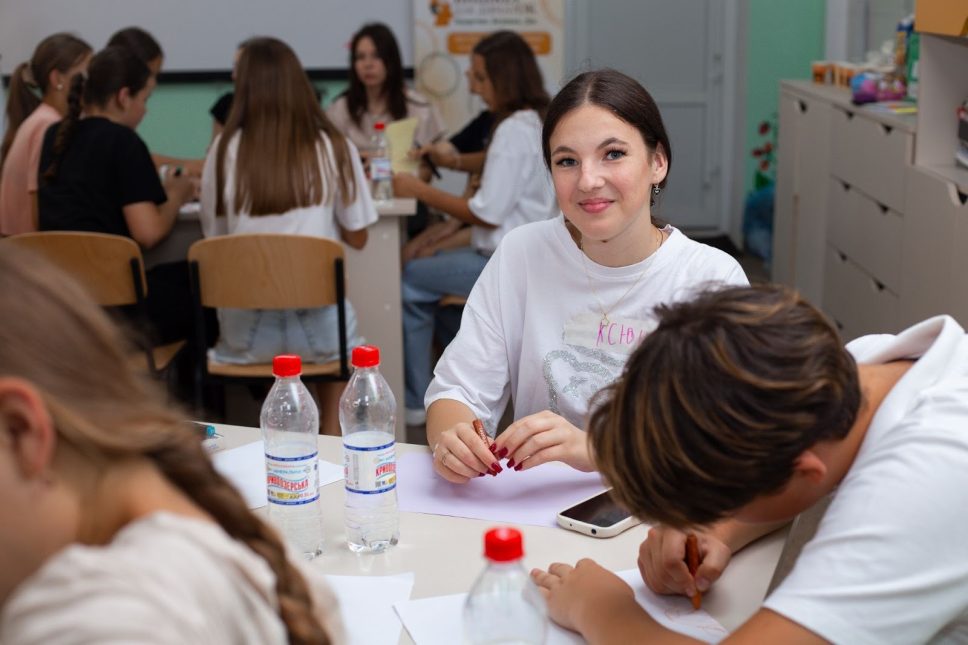
Boot camp in Starokozache village. Photo: Alina Harcheva
In the first two months, the project team held four mobile schools for over 100 girls from the Starokozache, Shabo, Serhiivka, and Bilhorod-Dnistrovskyi communities. There, they learned how to turn ideas for positive change in their communities into concrete action.
For example, some schools in the region still lack an air-raid alert system. Two participants therefore submitted an application to purchase loudspeakers and also proposed using them to announce a minute of silence in honour of those who have fallen in war.
Another team is working on promoting responsible attitudes towards stray animals. To encourage residents to care more about them, the girls plan to organise a training session, a charity event, and install 15 water bowls for animals. Yet another group aims to establish a safe and convenient bike parking area at school, allowing students to leave their bicycles there during classes without worry.
Participants of the boot camp also receive support from mentors: eight local activists who completed training and have been advising small groups of graduates for three months. One of them is Magdalena Paskar. She first joined the project as a participant and later became a mentor, helping others stay focused, identify first steps, and implement their ideas.
Magdalena is currently supporting a team of graduates who are implementing a project for young patients of the Bilhorod-Dnistrovskyi hospital. “The girls plan to hold monthly art classes in the hospital, including drawing and knitting, for children. This will serve as moral support for them,” says Magdalena.
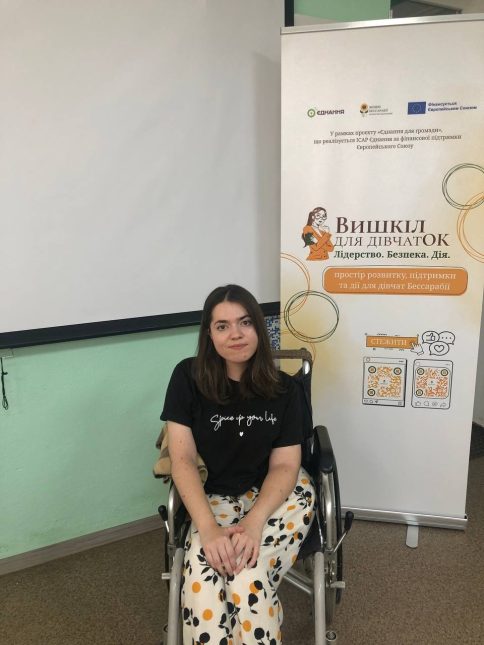
Magdalena Paskar. Photo from a personal archive
These and other initiatives by the boot camp graduates help the girls feel their impact and see opportunities for development in their own communities. This is the firm belief of Anna Ostrikova, Head of Grant and Development Programmes at ISAR “Yednannia”.
“This project may not be unique for large cities, but it is significant for rural areas. Thanks to such projects, girls gain not only practical knowledge but also faith in themselves. By staying in their home communities, they can fulfil their professional and social potential while bringing benefits to their community,” Ostrikova notes.
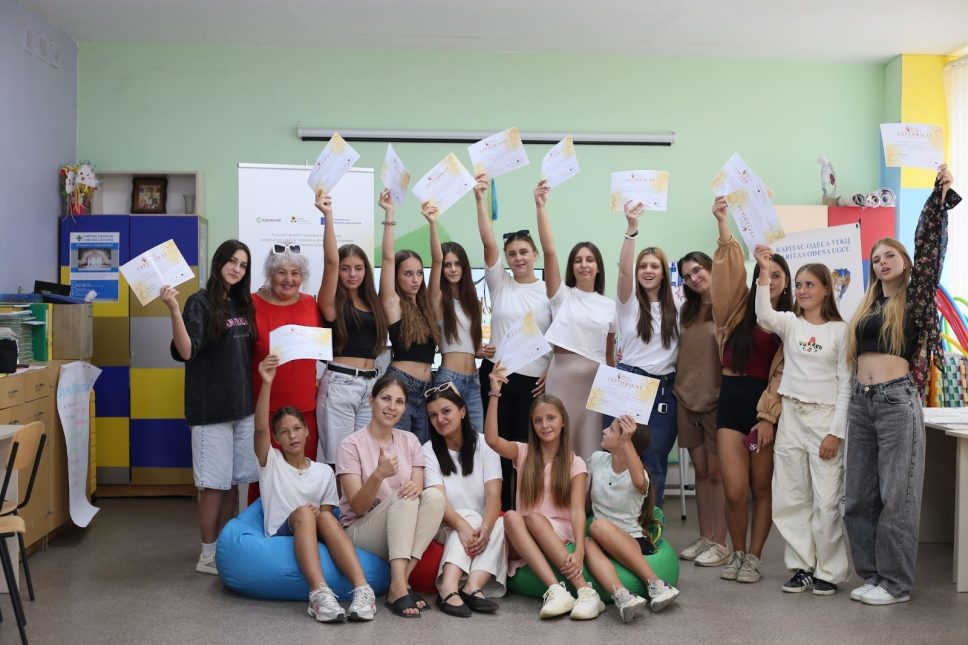
Participants of the mobile school in Serhiivka. Photo: Alina Harcheva
“Boot Camp for Girls” is one of many local initiatives that the EU has supported in Ukraine during the war. In 2025 alone, it allocated 14 million euros to support civil society organisations, including 5 million specifically for promoting women’s leadership and conflict resolution. Thanks to this support, dozens of projects have been implemented, bringing together women from different regions and sectors and strengthening their role in the country’s recovery.
These support priorities are not accidental. Social cohesion and inclusion are key European values that gain particular importance in the context of Ukraine’s reconstruction. They help address the consequences of the war, strengthen communities, and move Ukraine closer to EU living standards.
Source: Odesa Life