
‘Story book’: How School Yearbooks Became a Tool for Developing Youth Spaces with the EU4Youth Support
18/02/2026
When a team from Dnipro city (Ukraine) was considering launching a social enterprise, the idea looked wholly different. At the very beginning, they discussed opening a café — an open space for young people to meet and build communities. However, working with school students and youth initiatives gradually shifted their focus. It became clear that many schools lack not only places for social interaction but also the resources needed to create modern spaces where young people can learn, work in teams, develop their own ideas, and feel supported.
This is how ‘Story book’ was born – a social business that combines technology, entrepreneurship, and a social mission. The project was launched on October 18, 2024, at the Dnipro Youth Centre as part of the initiative ‘STARTUI: Social Entrepreneurship in a Youth Centre’, implemented by School of ME and the NGO ‘Youth Platform’ within the ‘EU4Youth – Youth Employment and Entrepreneurship’ programme.
How the Idea That Changed the Format of School Yearbooks Was Born
At the core of the ‘Story book’ initiative lies a simple yet unconventional idea: a school yearbook can be more than just a memory of school years — it can also become a tool for social change. The team began producing modern yearbooks with augmented reality features that let photos ‘come alive’ on a smartphone, making the product more engaging and appealing to young people.
At the same time, a strong social component was embedded into the business model. Twenty per cent of the revenue from each yearbook sale is reinvested into the development of youth spaces in Dnipro schools. As a result, every order automatically becomes an investment in the learning environment, student self-governance, and new opportunities for young people.
In addition to producing yearbooks, the team launched its grant programme, enabling schools and lyceums to receive funding for the creation of spaces for non-formal education, training sessions, teamwork, and leisure activities. This approach allows educational institutions not to wait for external support, but to become drivers of change themselves actively.
From Numbers to Impact: What Has Already Been Achieved in Dnipro
Within its first year of operation, ‘Story book’ has already demonstrated tangible social impact. During the 2024-2025 academic year, the team produced 354 school yearbooks and invested more than EUR 2,500 in the development of youth spaces.
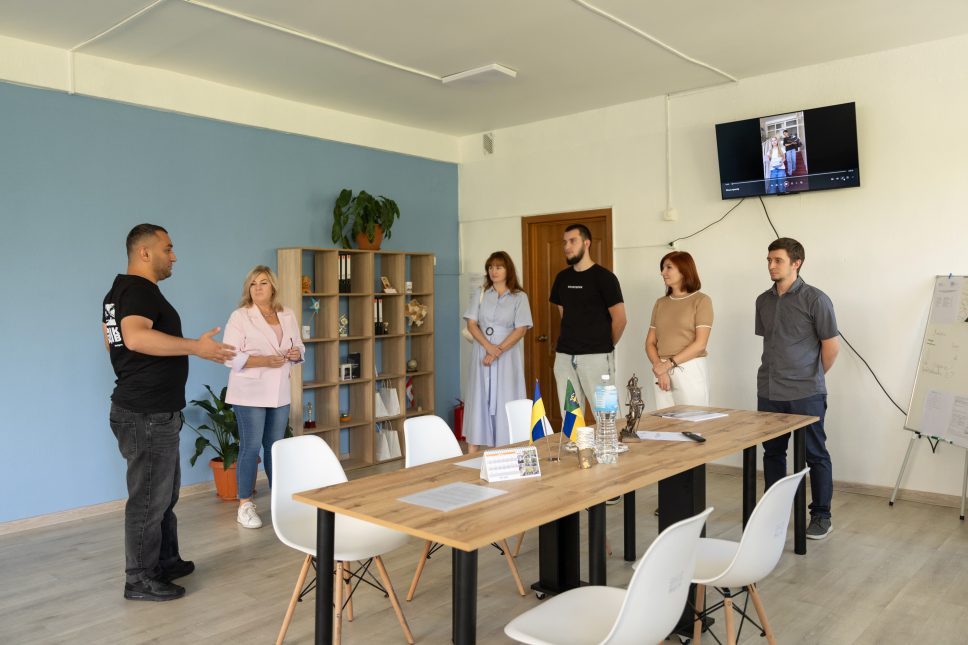
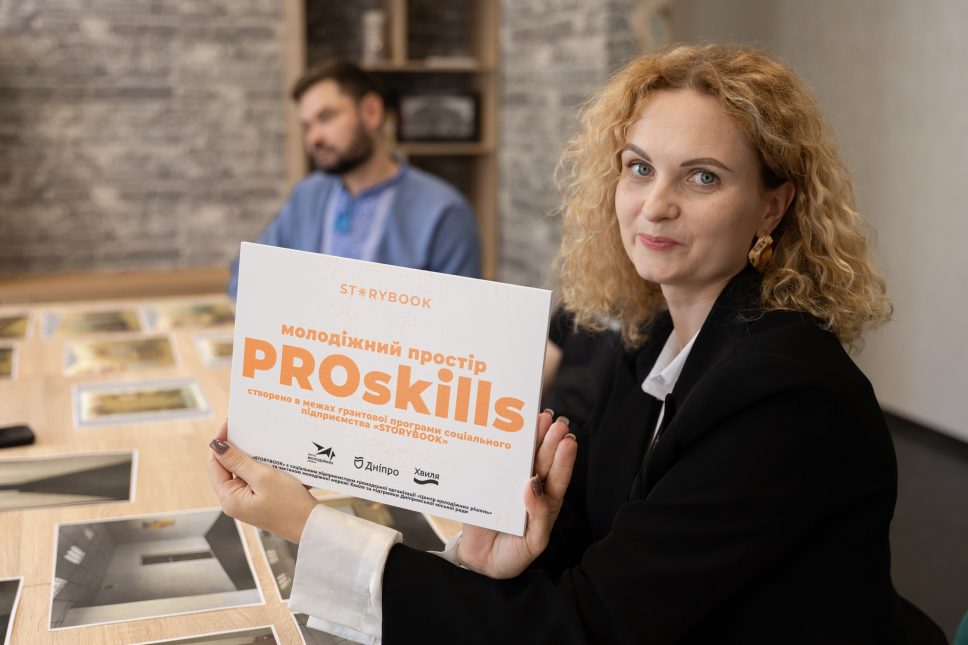
Thanks to this model, two new youth spaces were opened in Dnipro. The first one, ‘PROskills’, was created at the Scientific Lyceum of International Relations and became a venue for training, team activities, and skills development events. The second space, ‘DYULIA’, was launched at the City Law Lyceum and focuses on supporting student self-governance and legal education initiatives.
At the same time, the project team organised three motivational meetings with representatives of local businesses in Dnipro, bringing together more than 120 young people. These events help students explore real career pathways, gain practical advice, and draw inspiration from entrepreneurial success stories.
The newly created spaces do not remain static locations. Regularly, they host non-formal education training, youth community meetings, and educational activities delivered with the involvement of the ‘Story book’ team.
Scaling Plans and Long-Term Impact
The main beneficiaries of ‘Story book’ are school students and young people who gain access to modern learning conditions, personal development, and self-realisation. At the same time, schools benefit from additional development resources, while local communities gradually build a culture of social responsibility and youth support.
‘At ‘Story Book’, the team was able to view the school album not as the end point of the educational journey, but as a resource that opens up new opportunities for young people: through a product that is familiar to graduates, funds are raised for educational spaces, and the funds are put back to work for schools. For us, this is an example of how social entrepreneurship works through simple but well-thought-out solutions’, says Anna Gladka, head of Education and Consulting at the School of ME.
The project team is not planning to stop at the achieved results. During the 2025–2026 academic year, ‘Story book’ aims to open 10 additional youth spaces in Dnipro schools. In the long term, the project seeks to scale its model and make social entrepreneurship a sustainable mechanism for supporting young people.
‘Our goal is not just to create school yearbooks, but to make sure that every yearbook brings real value to young people’, says Mykyta Ihraiev, Head of ‘Story book’.
The ‘Story book’ experience demonstrates an example of systemic change at the community level. Where there were once only individual initiatives, today new youth spaces are emerging, fresh opportunities for students are being created, and sustainable social solutions are shaping the future of local communities.
The EU4Youth Phase III Youth Employment and Entrepreneurship programme,funded by the European Union and the Ministry of Foreign Affairs of Lithuania, is being executed by the Central Project Management Agency (CPVA) in Eastern Partnership countries. These include Armenia, Azerbaijan, Belarus, Georgia, Moldova, and Ukraine. The programme will run until the middle of 2026 and aims to provide technical assistance to governmental and non-governmental organisations to tackle youth unemployment and improve employability.