
The European Union and the United Nations Development Programme (UNDP) are helping Ukrainian communities restore healthcare and social services, strengthen security, support veterans and young people, and plan their future development. In 2026, €50 million was allocated for the second phase of EU4Recovery, and Zaporizhzhia Oblast was included among the programme’s priority regions.
“Pershyi Zaporizkyi” reports on how this support works and what has already been achieved in Zaporizhzhia.
What EU4Recovery is and how it helps communities
EU4Recovery is a flagship partnership between the European Union and UNDP in Ukraine, also funded by the Government of Sweden. The initiative operates in war-affected areas, helping to restore essential services, strengthen local self-governance, enhance security, and build connections among residents.
The first phase of EU4Recovery ran from 2022 to 2025. The programme is not limited to repairing damaged buildings: it takes a broader view of each area’s needs, from the functioning of hospitals and social services to employment and the capacity of local authorities to plan development.
For example, after hostilities, a town or village may simultaneously need medical equipment, support for displaced people, additional social services, training for specialists, and new jobs. Different types of assistance are combined so that each problem is not addressed in isolation.
EU4Recovery works across several areas, from developing local self-governance and basic services to economic recovery and work with specific population groups.
This approach was discussed on May 6, 2026, in Dnipro, where the second phase of EU4Recovery was officially presented. On that occasion, EU and UNDP representatives also visited partner regions and met with local authorities and residents.
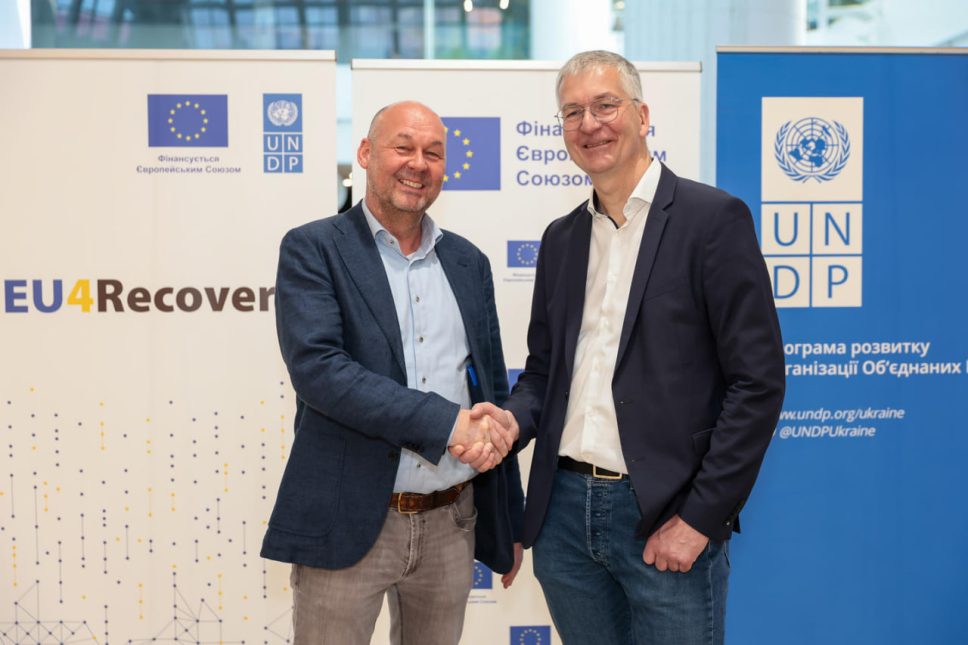
“As part of the next phase of the EU4Recovery flagship partnership, we are expanding support for regions and communities affected by the war,” said Stefan Schleuning, Head of Cooperation at the EU Delegation to Ukraine, at the launch.
According to him, the new phase should help strengthen essential services and security, support economic recovery and job creation, and help veterans return to civilian life.
From medical facilities to veteran spaces: what was achieved in the first phase
Between 2022 and 2025, EU4Recovery worked in more than 100 communities across Ukraine. Projects covered healthcare, social services, administrative services, security, community initiatives, youth, and veterans.
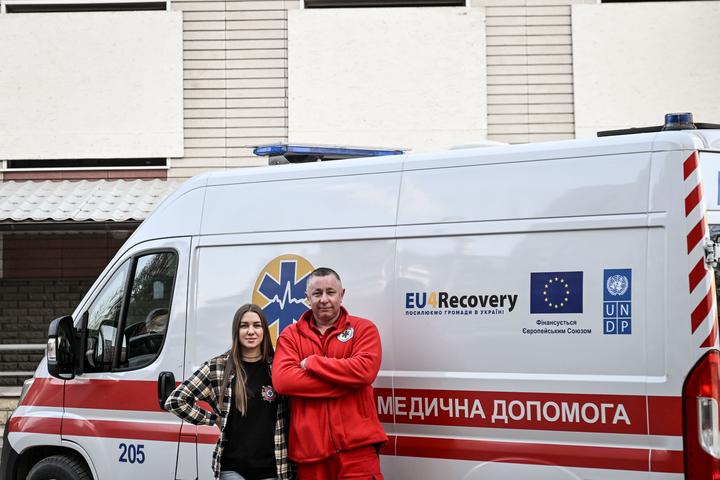
Healthcare was one of the key areas. According to UNDP data, 57 medical facilities in nine oblasts received equipment and other assistance. They were supplied with equipment for treatment and rehabilitation, telemedicine tools, and gear needed for emergency care.
Separately, specialists were trained. In total, 447 healthcare workers completed training, including 389 ambulance drivers, who obtained qualifications as emergency medical technicians.
The changes also reached everyday services. Thanks to mobile and modular centers and digital solutions, more than 222,600 residents gained better access to administrative services. In various oblasts, 29 mobile social services were also established.
Special attention was paid to security. Equipment was provided to 31 police and emergency response units. In addition, police stations, child-friendly justice spaces, and safety classrooms were opened in communities.
Grants for local initiatives were another tool. During the first phase, 166 projects were funded, reaching more than 115,000 people. The funds supported social entrepreneurship, psychological assistance, public safety, social cohesion, and veterans’ return to civilian life.
More than 235,000 residents gained better access to legal aid. Across different regions, 16 veteran hubs were supported, and 13 spaces were created for young people. Leadership programs, volunteer projects, forums, and idea competitions were also held.
In Zaporizhzhia, one such example is a youth centre for people displaced from occupied and frontline areas, which opened in May 2024. It was created by the NGO People.UA with a grant of more than $30,000 from UNDP, funded by the EU under EU4Recovery. The center has spaces for learning, co-working, volunteering, and youth initiatives.


EU4Recovery’s second phase: where the €50 million went
The second phase of EU4Recovery started in May 2026 and will run until the end of 2028. The European Union and Sweden have allocated another €50 million for it.
The main regions where the program will operate include Zaporizhzhia, Mykolaiv, Sumy, Dnipropetrovsk, Kharkiv, Kherson, and Chernihiv oblasts. Separate projects are also planned for areas in Poltava, Cherkasy, Bukovyna, Odesa, Donetsk, and Luhansk regions.
In 2026, the Zaporizhzhia, Vilniansk, and Shyroke communities joined specific components of EU4Recovery. In particular, they became part of a project to set up working groups in which representatives of local authorities, civil society organizations, and residents can jointly identify community needs, plan reconstruction, and discuss future projects.
The new phase places greater emphasis on enabling local governments to identify needs and plan further changes on their own. To this end, specialists are trained to prepare projects, analyze the situation in their territories, develop institutions, and involve residents in decision-making.
For example, after a large number of displaced people arrive, a town or village needs to assess how the load on hospitals, schools, social services, and administrative service centers has changed. This determines whether additional staff, transport, equipment, or new services are needed.
Another area concerns the economy. In communities where businesses have closed, been damaged, or relocated because of the war, the availability of jobs directly affects whether people stay. That is why EU4Recovery covers employment, vocational training, and the development of local job opportunities.
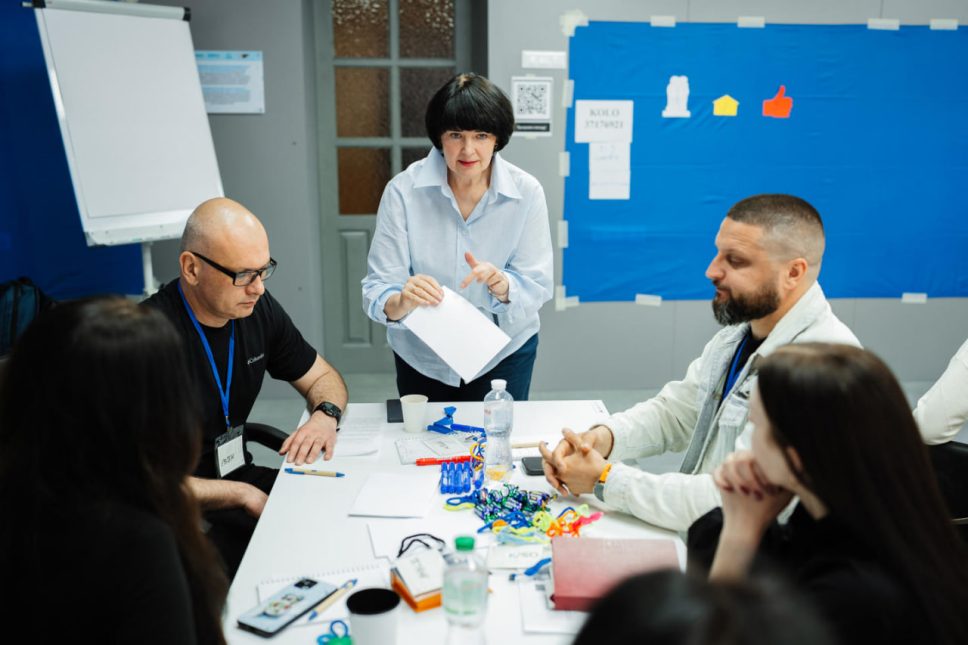
Considerable attention is also paid to veterans. In summer 2026, 24 strategic sessions were held in Dnipropetrovsk, Zaporizhzhia, Mykolaiv, Poltava, Sumy, Kharkiv, Kherson, and Chernihiv oblasts. They brought together 675 representatives of local authorities, the veteran community, and the social, medical, and legal sectors.
The meetings discussed where a person can turn after returning from service, and how to develop veteran spaces, employment, entrepreneurship, accessibility, and psychological services.
“Reintegration processes must be carried out together with veterans, not designed for them without their direct involvement,” emphasised Henrik Wittfeldt, Acting Head of Cooperation at the EU Delegation to Ukraine, summing up this cycle in August 2026.
According to him, through EU4Recovery and other instruments, the EU funds initiatives that help former service members return to civilian life, find jobs, start their own businesses, and take part in decision-making.
During the same meetings, UNDP Resident Representative in Ukraine Auke Lootsma pointed to another problem: after service, people often have to find the right institutions on their own and apply separately for medical, social, legal, and other services. One of EU4Recovery’s approaches is to make such assistance more coordinated and easier to navigate at the local level.
Text – Anastasiia Havrysh, Andrii Vavilov
Source: Pershyi Zaporizkyi