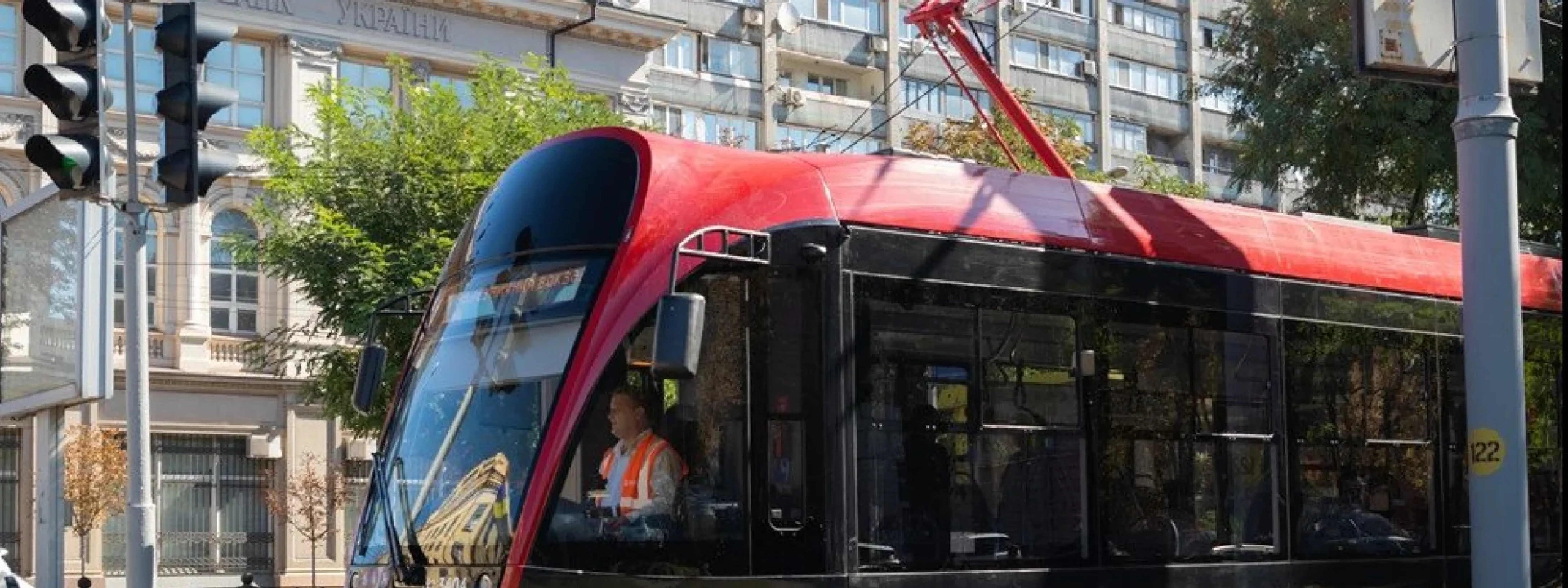
The eastern Ukrainian city of Dnipro has put five new trams into service as part of a renewal of electric public transport backed by €21.4 million in financing from the European Investment Bank (EIB), the Bank announced on 9 September.
The upgrade comes as Dnipro, home to around 800,000 people, keeps essential services running amid the war against Russia.
The new vehicles are Dnipro’s first low-floor trams – a significant addition to a fleet that is more than 40 years old on average. The low floors make boarding easier for older people, passengers with disabilities and parents with prams. The trams, which were manufactured locally, feature modern passenger-information systems. They are also quieter and more energy-efficient, helping make public transport greener and more resilient to climate change.
“Keeping people moving – to work, school, and around the city – matters every day and even more so during the war,” said EIB Vice-President Karl Nehammer. “Our support is helping Dnipro renew transport that people rely on while bringing more accessible vehicles into service and supporting their production here in Ukraine.”
The trams were manufactured by Tatra-Yug at its production facilities in Dnipro, with up to 70% of the components sourced from Ukrainian suppliers. The vehicles are operating on line No. 1 between the main railway station and the Ukrainian State University of Science and Technologies, a route popular with both Dnipro residents and visitors to the city.
The renewal goes beyond the five trams. The EIB financing of €21.4 million also covers additional trams and maintenance equipment, as well as 15 new low-floor trolleybuses set for delivery later this year and in 2027.
The investment in Dnipro is part of the €200 million Ukraine Urban Public Transport Project II, through which the EIB supports Ukrainian cities in upgrading urban public transport. The project is coordinated by the Ministry of Finance of Ukraine and implemented by the Ministry for Recovery, Infrastructure and Transport of Ukraine in cooperation with the participating municipalities and their municipal transport companies.
Find out more
News
-
Digital hub in Zaporizhzhia: what opportunities and EU support local businesses receive
-
Three Ukrainian vocational education and training colleges set to receive more than €24 million in EU-backed financing for new centres of vocational excellence
-
Strategic Thinking, Sustainable Development, and Integrity: How EU Municipalities Are Helping Ukraine Integrate into the EU
-
EU-Supported Narrow-Gauge Railway Station Museum Under Construction in Prykarpattia
-
Kyiv puts 85 new buses into service with EU support, improving daily travel for residents
-
European Investment Bank allocates €60 million for border infrastructure modernisation