
A project by the NGO “Bukovyna Innovative Foundation,” implemented with support from the EU and UNDP in Ukraine, helped young people, including displaced persons, launch social enterprises and integrate into their communities.
In Chernivtsi Oblast, the project “Integration of IDP Youth into Local Communities of Chernivtsi Oblast through the Development of Youth Social Entrepreneurship” has been completed. Over the course of the project, young people from six communities, including internally displaced persons, established eight social enterprises, completed entrepreneurship training, and launched their own initiatives.
The project was implemented by the NGO “Bukovyna Innovative Foundation” with support from the United Nations Development Programme (UNDP) in Ukraine and funding from the European Union under the “EU4Recovery – Empowering Communities in Ukraine” project. Its goal was to help young people, particularly those displaced by the war, integrate into their communities through the creation of social enterprises, training, and teamwork.
In the first selection stage, 28 teams comprising 138 participants registered. Eight teams made it to the final round, launching social enterprises in the Vyzhnytsia, Mamalyha, Khotyn, Hlyboka, Chernivtsi, and other communities across the region. Areas of work included producing fruit snacks and pastila, growing microgreens, upcycling clothing, making fabric-based products, and selling online courses and paracord bracelets.
As part of the project, 28 training sessions were organized, directly engaging 96 people in the social enterprises. The teams produced approximately 1,000 units of goods and generated approximately UAH 40,000 in revenue. In addition, five educational institutions introduced a course titled “Social School (Youth) Entrepreneurship,” which is taught by trained mentors.
Tetiana Mosin, Head of the NGO “Bukovyna Innovative Foundation,” noted that one of the project’s most important outcomes was its sustainability.
“For me personally, the main criterion of effectiveness is sustainability. The mentors and teachers trained during the project continue to pass on their knowledge. Integrating the ‘Social Entrepreneurship’ course into the curriculum of five educational institutions guarantees that the initiative will live on even after the grant funding ends.”

She also noted that during the project’s implementation, the team faced a number of challenges. These included high demand for participation in the events, insufficient awareness of social entrepreneurship, and the heavy workload of teachers who had to balance project work with their teaching duties. At the same time, according to Tetiana Mosin, this experience confirmed the need to continue developing youth entrepreneurship in Bukovyna.
One of the teams was “ProZdorove” from Miliieve Support Lyceum, which produces fruit chips.
Team mentor Alina Lakhman explained that the idea emerged after observing that students mostly bought snacks during breaks.
“We decided to offer a truly tasty and nutritious alternative to unhealthy snacks, while also teaching children the basics of entrepreneurship and taking care of their own health.”
According to her, over the course of the project, the team managed to establish a full production cycle, create their own brand, and build a circle of regular customers among students and teachers.
“Our main achievement is the team of teenagers we’ve formed, who are now gaining hands-on experience in marketing, financial, and communication skills.”
The mentor also emphasized that participation in the project helped young people among internally displaced persons integrate into the community faster.
Another project participant was the “Green Spot” team from Hlyboka Lyceum, which grows microgreens.
Former team leader Yevheniia Hlobak shared that after completing the training, the business didn’t stop operating: “Our microgreens-growing lab continues to run successfully. A new generation of students has taken our place, and we share our experience and offer advice to help the business keep growing.”
According to her, local restaurants remain the main clients today: “We tried selling our products through stores, but the produce lost quality due to improper storage conditions. So we focused on partnering with food service establishments instead.”
Yevheniia Hlobak also noted that participating in the project gave her hands-on experience in social entrepreneurship and taught her how to work in a team, take responsibility for a shared cause, and combine social value with entrepreneurial skills.
One of the businesses created within the project was “Craft Pastila” from Khotyn Lyceum No. 5. According to team mentor Anastasiia Anisimova, the idea came about after the school saw an announcement about a social school entrepreneurship competition from the NGO “Bukovyna Innovative Foundation.” After discussing options, they decided to make homemade apple pastila, since no such production existed in the community yet.
Over two years of operation, the team has presented their products at the Chernivtsi Regional Forum for School Entrepreneurship Development and the Regional Craft Forum in the Khotyn community, and has also given pastila as a gift to international delegations.
The most valuable feedback, according to Anastasiia Anisimova, came from children tasting the pastila for the first time.
“We have a video testimonial from one teacher’s grandchildren. They said they didn’t need candy or chocolate anymore, the pastila was so delicious. That meant the most to us.”
During the launch of the business, the team faced several challenges.
“The biggest challenges came at the start, when we were perfecting the recipe to get the right taste and consistency. Later, power outages became a major problem, since making pastila takes about 12 hours, and that process becomes much harder without electricity.”
According to the mentor, the business promotes healthy eating through social media and its own products, which contain only natural fruits and berries.
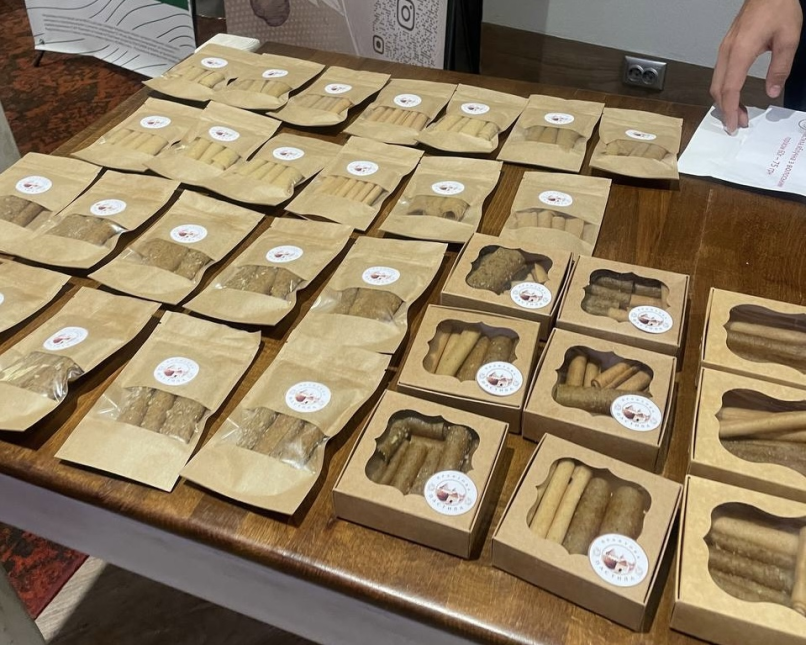
Going forward, the team plans to continue operating the business, although its main goal for now remains educational.
“Right now, our business is primarily focused on an educational goal — teaching children the basics of entrepreneurship and pastila-making. We hope that in the future we’ll be able to move up to a higher level.”
Another example is the “EkoStyl” team from Chernivtsi Gymnasium No. 9, which works on upcycling clothing. School principal Halyna Furdyha shared that the students themselves chose this direction.
“Kids want to dress stylishly. Clothes aren’t always affordable, so they decided to create their own style. It was the children who came up with this idea.”
According to her, the items are made mostly from old denim clothing, and the money earned is used to buy materials and support the military.
“Our biggest achievement is that the children learned to work as a team, plan their activities, meet deadlines, and make things with their own hands.”
She also noted that older participants pass on their experience to younger students.
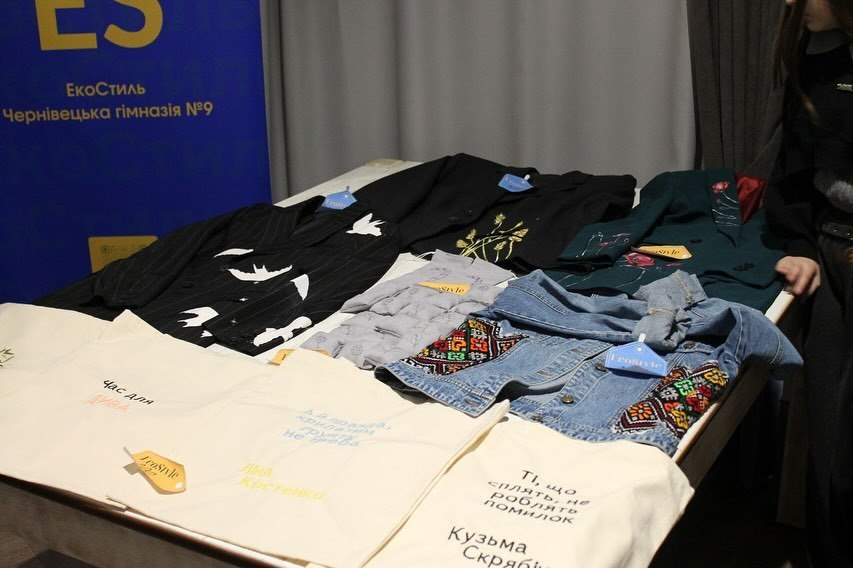
Among the difficulties, the principal mentioned legal restrictions that prevent students from fully engaging in entrepreneurial activity, as well as a shortage of teachers who could lead the creative direction.
“The biggest challenge right now is finding someone who can teach children to sew, embroider, work with creative ideas, and run a business like this.”
According to Halyna Furdyha, the business is now gradually moving from simply upcycling denim items to creating full outfits and developing students’ design thinking.
“This is no longer just about repurposing clothes. It’s about shaping the image of a modern teenager, and developing creativity, leadership, environmental awareness, and responsible consumption habits.”
The project “Integration of IDP Youth into Local Communities of Chernivtsi Oblast through the Development of Youth Social Entrepreneurship” was implemented by the NGO “Bukovyna Innovative Foundation” with support from the United Nations Development Programme (UNDP) in Ukraine and funding from the European Union under the “EU4Recovery – Empowering Communities in Ukraine” project. As part of the initiative, eight youth social enterprises were created in six communities of Chernivtsi Oblast, and five educational institutions introduced a course on social school entrepreneurship, which continues to run after the project’s completion.
Source: shpalta.media