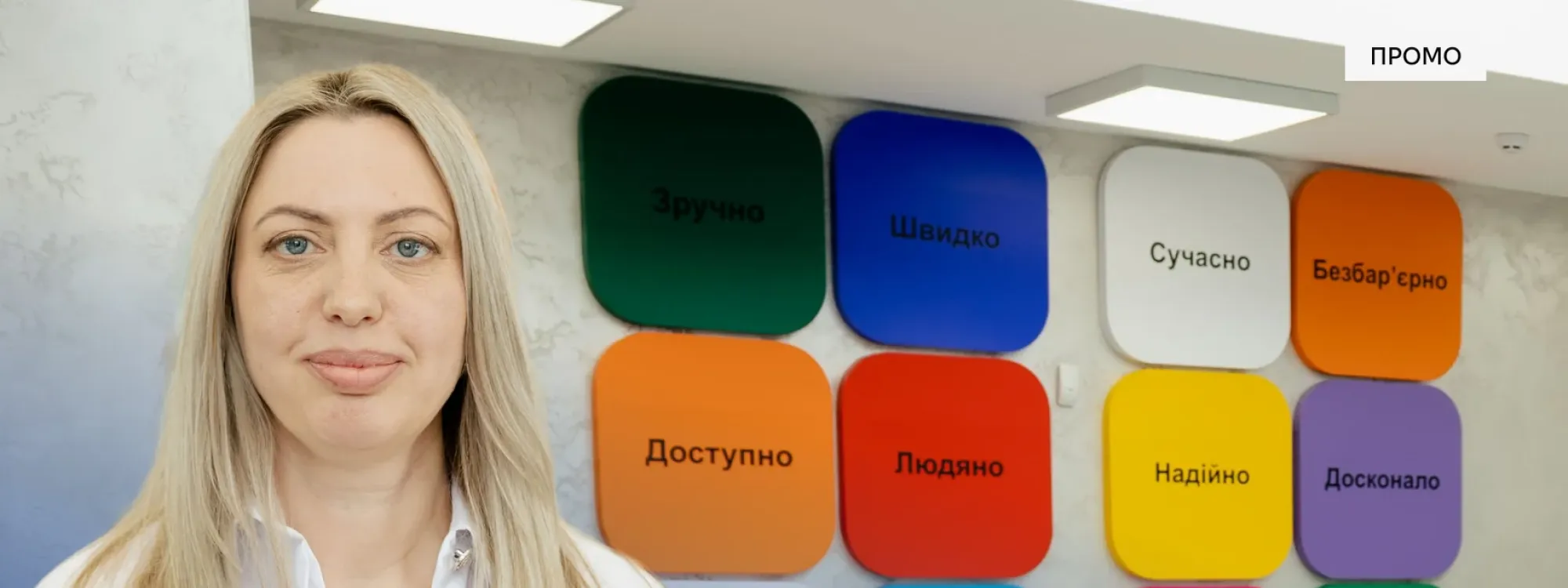
Narrow corridors, queues, and no shelter — these were the conditions in which the Administrative Service Centre in the settlement of Slobozhanske, Dnipropetrovsk Oblast, had been operating for years. Thanks to funding from the European Investment Bank (EIB) — the bank of the European Union (EU) — under the Ukraine Recovery Programme, administrative services have become accessible, comfortable, and safe for 24,000 residents of the community, including around 4,000 internally displaced persons (IDPs), as well as residents of Dnipro and the town of Pidhorodne.

Tetiana Oliinyk has headed the Administrative Service Centre of Slobozhanske settlement in Dnipropetrovsk Oblast since its opening in 2016. For 10 years, her priority has been the quality delivery of administrative services and assistance to every visitor.
“We provided many services, but the premises were very small: the ground floor of a nine-storey building with an area of 183 sq. m, where around 10 administrators worked. In summer it was hot, and in winter the doors were constantly open, so there were draughts,” Tetiana recalls.
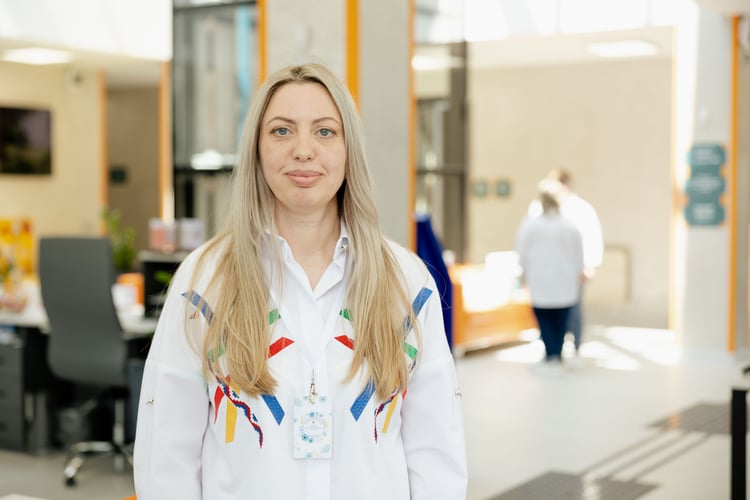
According to Tetiana, another inconvenience for visitors was the need to provide personal information: in such a small space, it was difficult to maintain confidentiality.
In spring 2026, the team moved to the new Administrative Service Centre, which had been under construction for two years. The total cost of the project came to nearly €1.47 million, of which more than €1.15 million was financed under the Ukraine Recovery Programme, with the remainder covered by the local budget.
Comfort and accessibility for all
Today the administrative service centre is a three-storey building with a floor area of more than 1,100 sq. m and a reliable underground shelter.
“We have equipped it with workstations, so during air raid alerts we continue to provide some services, and people are not forced to wait outside,” the head of the centre shares. “Everything is so lovely. There is simply no point in comparing it to the previous premises.”
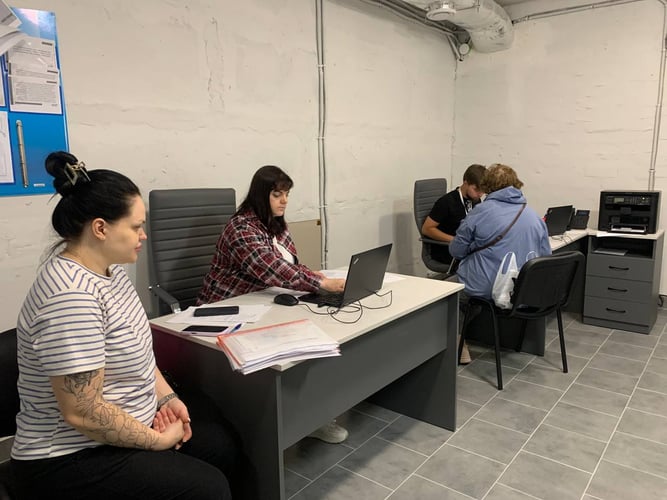
The building was designed according to barrier-free principles: there is no ramp, as the entrance is at ground level; there is a lift to the shelter, tactile paving, a lowered reception desk, adapted bathrooms, and a changing table.
“We have a QR code that allows visitors with hearing impairments to receive a consultation in sign language, and allows us to understand which service they need,” explains Tetiana Oliinyk, Head of the Slobozhanske Administrative Service Centre.
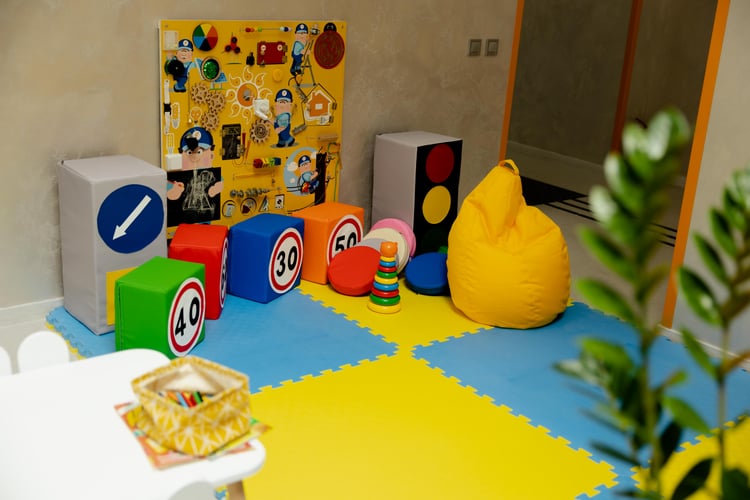
A self-service area with a laptop has been set up here, and there is a conference room. An air conditioning and ventilation system has been installed in the building.
“We can see from people’s reactions that they like it here. We have one regular visitor among the local residents who asked how many services we provide — presumably so he could use them all. He comes regularly, takes a number, sits on the sofa, then goes down to the shelter for a cup of tea,” Tetiana says with a smile.
As head of the centre, Tetiana cares not only about the quality of services, but also about the comfort of her staff.
“There is more space and light here. The old premises were psychologically oppressive. We ourselves enjoy working here, and visitors can feel that. The most important thing for us is that people leave satisfied,” she says.
The community is currently working on a backup power supply and is considering the possibility of installing solar panels to ensure the centre continues to operate even during blackouts.
Reconstruction that does not wait for the war to end
In the first three months after opening, the number of visitors to the Administrative Service Centre increased. In Tetiana’s view, this was due not only to the new location, but also to the space itself. Tetiana has lived in Slobozhanske her whole life and recalls that previously there was simply a wasteland here, and the new centre has become a symbol of change and a calling card for the community.
“When a person receives services in such premises, they get the feeling that someone cares about them. This is how a community shows respect for its residents,” Tetiana believes.
Local residents enjoy spending time in the area around the building — sitting on benches and having picnics with their children.
“We were fortunate that our community was included in the Ukraine Recovery Programme. And thanks to EU support, such a beautiful building was built for us,” adds Tetiana, Head of the Slobozhanske Administrative Service Centre. “So we are very pleased and grateful.”
The construction of the Administrative Service Centre took place under the Ukraine Recovery Programme — one of three joint EU and EIB initiatives with a total budget of €740 million, supporting communities in rebuilding social infrastructure. The programme is being implemented jointly with the Ministry of Restoration, Infrastructure and Transport, the Ministry of Finance of Ukraine, and local authorities, with technical support from the United Nations Development Programme (UNDP).
At present, a total of 31 projects have been completed or are under way in Dnipropetrovsk Oblast under the EIB recovery programmes. Overall, the programmes cover more than 500 social infrastructure facilities — schools and kindergartens, hospitals, rehabilitation centres, water supply and sewerage systems, centralised heating, and social housing — in more than 300 communities across the country.
This article was produced with the financial support of the European Union. Its contents are the sole responsibility of the Ukraine Recovery Programme and do not necessarily reflect the position of the European Union.
Source: Hromadske