
How does the European framework protect species and habitats across the continent?
Over 40 years ago, the Council of Europe adopted the Convention on the Conservation of European Wildlife and Natural Habitats (1979), or Bern Convention, the first international treaty to protect both species and habitats, and to promote coordinated action on nature conservation.
Today, the Convention brings together 49 countries, including all the European Union (EU) member states and Eastern Partnership (EaP) countries.
Under the Convention, biodiversity-rich areas are designated as Areas of Special Conservation Interest (ASCIs) and integrated into the Emerald Network, which protects vulnerable species and habitats, and extends European nature conservation standards beyond the EU.
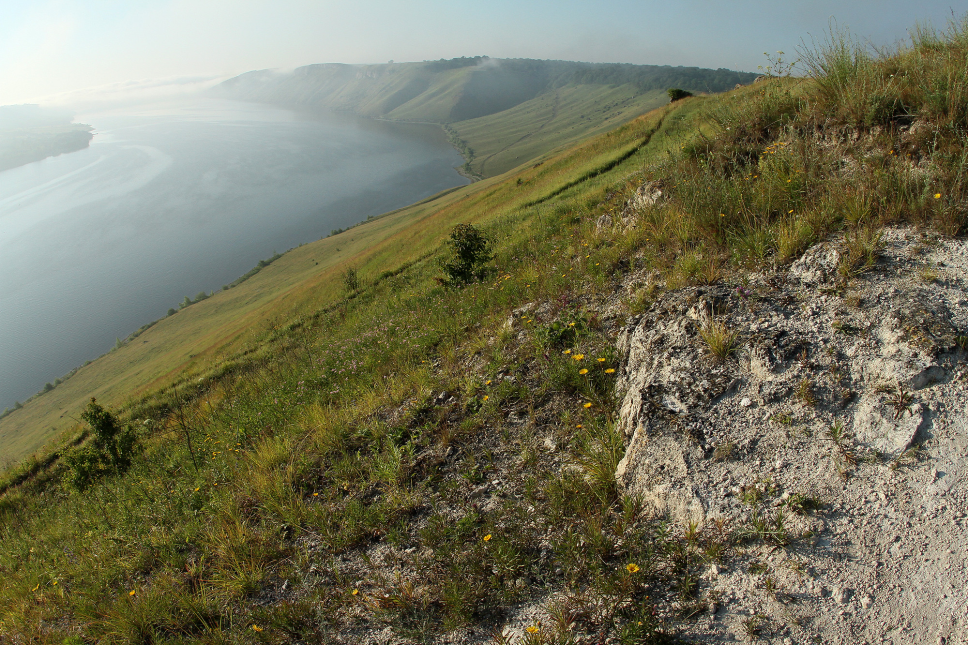
To fulfil its commitments, the EU adopted the Habitats Directive in 1992, and subsequently set up the Natura 2000 network of over 27,000 protected nature sites, covering nearly one-fifth of the continent’s land area. Natura 2000 sites encompass a range of habitat types, such as forests, grasslands and wetlands, as well as coastal and marine environments.
Within the EU, the Habitats Directive and the Birds Directive provide the legal basis for the designation and management of Natura 2000 sites, which represent the EU’s implementation of the Bern Convention objectives and its formal contribution to the pan-European Emerald Network.
How does the EU support Eastern Partnership countries in expanding the Emerald Network?
The EU has supported EaP countries in expanding this network through a combination of financial, technical, and policy support, both historically and through ongoing programmes.
From 2009 to 2011, the EU partnered with the Council of Europe in a Joint Programme that laid the foundation for Emerald Network expansion in the EaP countries. The programme focused on assessing biodiversity, identifying species and habitats of conservation interest, and selecting potential areas for Emerald Network designation. A follow-up Phase II Joint Programme from 2012 to 2016 continued these efforts, helping countries move from site identification toward formal Emerald Network designation and implementation.
Building on the results of this work, the EU now supports the EaP countries, mainly through the EU4Environment programme, to safeguard biodiversity by helping them to manage existing Emerald Network sites and prepare proposals for new sites to join the network. Additional support is available to Moldova and Ukraine as EU candidate countries through the LIFE Programme. Additionally, the APENA project within the EU’s ‘Support to Ukraine in the approximation of the EU environmental acquis’ has developed one management plan for an Emerald Network site, the Pyriatynskyi National Nature Park. The EU also supports regional collaboration and the exchange of data with its member states.
Specifically, EU4Environment helps the countries through:
- Guidance and recommendations for official adoption of Emerald sites.
- Development of management plans for Emerald sites to ensure mutual benefits of nature and the local communities.
- Alignment of national policies with EU standards to ensure a smooth transition from the Emerald Network to Natura 2000, particularly in the EU candidate countries.
- Revision and optimisation of the Emerald database to update and correct data.
- Capacity building for the management of the Emerald Network and implementation of appropriate conservation measures.
- Improvement of scientific knowledge to collect and process data, assess conservation status, and inform conservation strategies.
Spotlight on Ukraine
Although Ukraine occupies less than 6% of Europe’s land area, it harbours 35% of the continent’s biodiversity, comprising more than 70,000 species, many of which are rare or endemic. Located at the crossroads of various biogeographic regions, the country is considered as a biodiversity hotspot, due to its significance for migratory species and its geographic diversity.
Ukraine ratified the Bern Convention in 1999, and currently has 377 sites officially recognised as part of the Emerald Network. Together, these sites preserve 300 species of animals and plants and 118 habitats of European conservation importance. Additionally, 161 proposed sites are under consideration to receive an official candidate status.
The Emerald Network in Ukraine protects a variety of critical habitats such as forests, grasslands, wetlands, and aquatic ecosystems. All of them are essential for the conservation of rare and endangered species. One prominent example is the Dnieper Ecological Corridor, which encompasses a diverse range of ecosystems, such as forests, meadows, steppes, and wetlands. This corridor alone supports more than half of Ukraine’s fauna and flora, with 11 Emerald sites within its boundaries.
As an EU candidate country, Ukraine has committed to aligning its core values, regulatory framework, and institutions with those of the EU, including in the areas of environmental protection and biodiversity conservation. EU4Environment supports this process by evaluating the impacts of human and military activities on protected sites, developing recommendations for pilot management plans, strengthening capacity building for local government authorities, businesses, and communities, and raising public awareness about the value and benefits of nature and biodiversity conservation.
EU support for nature conservation in the region has gone beyond policies and institutions. As part of the EU/UNDP EU4EMBLAS programme, artificial reefs were installed in August 2023 in the Tyligul Lyman protected area to help restore biodiversity. In summer due to high temperatures, organic matter in the lagoon gets decomposed, creating “dead zones” on the seabed and shores. To improve conditions, special hemispherical reef balls provided by the Reef Ball Foundation were placed in the water to support marine life and natural filtering species. After one year, the reef balls were covered with shellfish and algae, and goby fish had already moved in, showing early signs of ecosystem recovery.
In 2020–2021, the EU/UNDP EMBLAS programme has funded a pilot project “Arrangement and Cleaning of Recreational Areas of the National Park Beloberezhya Sviatoslava” on the Kinburn Peninsula, translating the EU’s commitment to nature conservation into concrete action. It helped set up waste sorting facilities, install eco-friendly sanitation systems, remove household waste, and organize eco-events that involved nearly 500 people and reached over 1,200 visitors to the park. The Kinburn Peninsula has since been directly affected by Russia’s war of aggression and is currently under occupation. As a result, the positive impacts of this support have been largely destroyed.
Russia’s war of aggression against Ukraine since February 2022 has significantly disrupted the country’s nature conservation efforts and affected the implementation and management of the Emerald Network. Currently, 160 of the adopted Emerald Network sites and 30% of all protected areas have been affected by fires, shelling, heavy machinery, and toxic pollution, with documented cases of habitat destruction. In response, EU4Environment support includes devising strategies to restore damaged sites through ecosystem restoration and remediation actions.
Emerald sites in Ukraine currently cover 11.4% of the country’s land area, a proportion the country plans to increase to 20% in line with EU ambitions, where Natura 2000 sites span over 18.6% of the land area. Ultimately, upon accession to the EU, Ukraine’s Emerald sites will become Natura 2000 sites.
EU4Environment reports on the Emerald Network in Ukraine
Online course on the Emerald Network
Flyer on the Emerald Network in Ukraine (English, Ukrainian)