
After her son was wounded in action, this mother was left to face a host of problems on her own. The paperwork needed to be sorted out urgently, yet she had no idea where to start or who to turn to. At that difficult time, she sought help from service providers specialising in supporting veterans and their families.
“We helped the soldier’s mother obtain the necessary certificates and apply for a certificate of active military service. The soldier is currently undergoing rehabilitation. We are helping him submit documents to resolve housing issues and undergo a military medical examination,” says Mariia Stelmashchuk, a specialist providing support to war veterans and demobilised military personnel in Ustyluh municipality, Volyn Oblast.
Often, stories like this come to a dead end. However, the full-scale invasion has fundamentally changed the role of municipalities, and responses to new social challenges — which often require an individualised approach, coordination between different institutions and a thorough understanding of the law — are now being developed at the local level.
From isolated decisions to a systematic approach
The municipality of Ustyluh shows how to respond to these challenges in a systematic way, combining its own initiatives with support from international programmes. Among veterans’ needs are resocialisation and integration, assistance with applying for benefits, finding employment, and accessing medical, administrative and social services.
From idea to programming
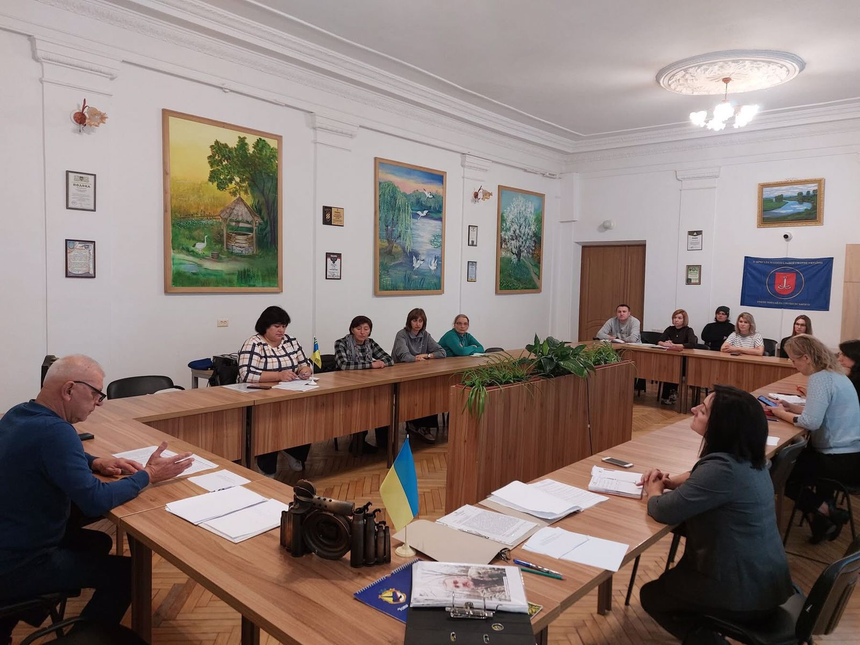
Participation in U-LEAD’s training programme in 2025 played a key role in transforming the way the work with veterans is organised in Ustyluh. The programme focused on helping municipalities not only to respond to challenges, but also to systematically structure their efforts and build a comprehensive support system for veterans and their families — complete with their own documents, plans and support programmes, institutions, operational procedures and partnerships. For Ustyluh municipality, this also served as a catalyst for specific administrative decisions.
“Even whilst we were still being trained, we carried out a needs assessment through a survey of veterans, which gave us an unexpected insight. We assumed that the main request would be for financial assistance. But what they need most is social interaction, information and solutions to housing issues,” says Zhanna Pivnytska, the Head of the Department of Social and Veterans’ Policy and Healthcare at Ustyluh City Council.
These findings influenced subsequent decision-making: the municipality carried out an audit of its property and housing stock, which could be converted into accommodation or a veterans’ centre if required, and also redirected some of its services towards providing information and social support.
“We realised that we needed our own social services provider. And back in May, we set up the Social Services Centre at Ustyluh City Council. The municipality has drawn up a separate Programme to support veterans and their families up to 2030. We have developed the Procedure for the Use of Funds as well as the Action Plan, which have helped both the specialists and the veterans themselves. Furthermore, we have introduced the position of chief specialist within the Department to deal directly with veterans’ policy,” says Zhanna Pivnytska.
This is an important step in the development of the local social support infrastructure. Until now, residents of Ustyluh municipality had been receiving social services in the neighbouring municipality of Zymne. Now the situation has changed.
“Among the most common requests are applications for social services, in-home care, support for wounded veterans and assistance for the families of those missing in action,” says Olena Mazurok, the Director of the Social Services Centre.
From isolated services to a single hub
Ustyluh placed special emphasis on ease of access to services. The municipality decided to centralise all key services as much as possible in one spot, the City Council building.
“We’ve set things up so that everything is close at hand: the ASC, social and veterans’ services, and partner organisations that provide psychosocial support, run various training sessions and build a space for families with similar experiences to connect,” says Zhanna Pivnytska.
Reaching out to people rather than waiting for them to come to you
Working with veterans in a municipality means more than just providing advice. Specialists accompany them to the Job Centre, hospitals and the Pension Fund. In collaboration with the local council districts, they organise visits to veterans and their families and provide assistance directly on site.
“A veteran doesn’t have to come to us — we can go to them. These visits take place jointly with support specialists, staff from the Resilience Centre and representatives from all departments of the city council,” says Zhanna Pivnytska.
Following its participation in the programme offered by U-LEAD with Europe, the municipality began to engage external resources more actively. Ustyluh has signed memoranda of understanding with charitable organisations, enabling the municipality to meet certain needs of male and female veterans.
Accessibility and dialogue as part of the changes
Accessibility has emerged as a separate area of focus. An analysis revealed that the City Council building does not fully meet the needs of people with reduced mobility. This led to the installation of accessible entrances, tactile paving and Braille signage.
Another new initiative has been regular meetings with veterans and the families of those missing in action. The municipality holds quarterly meetings.
“This wasn’t the case before. Now we meet regularly, listen, respond and look for solutions together,” says Zhanna Pivnytska.
Colleagues from other municipalities are keen to adopt these practices and lessons learnt to establish their own systematic approach.
Support without pressure
The Social Services Centre has deliberately adopted a non-intrusive approach to working with veterans, creating an environment where people can come of their own accord when they are ready to do so. According to Olena Mazurok, veterans are aware of the opportunities available to them. And for now, that is enough; rather than putting pressure on them, the focus is on being there for them.
By way of example, the active veteran municipality is working to establish a veterans’ hub. At the Social Services Centre, they believe that as this hub develops, new points of cooperation and partnership will emerge, helping to improve contact and expand support even further.
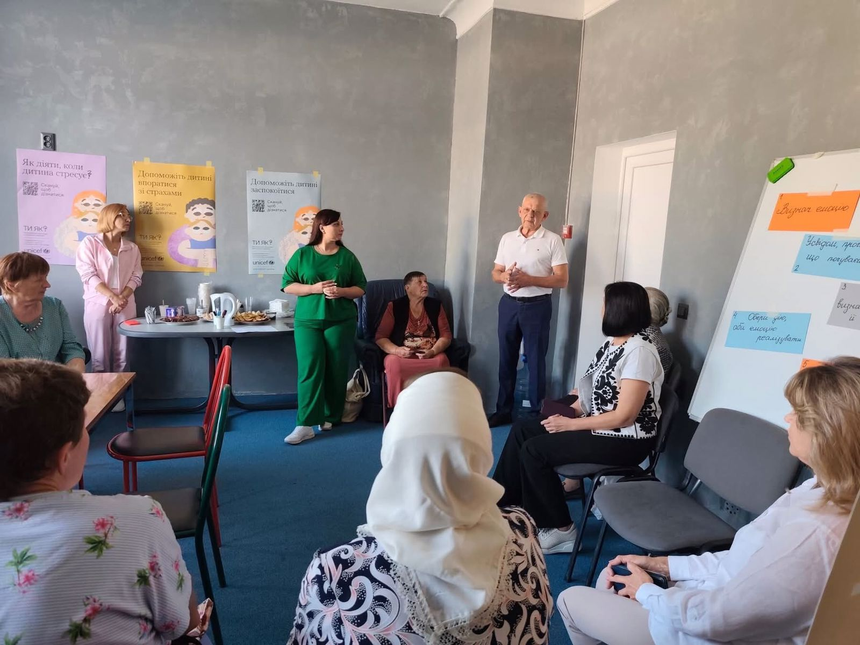
The case of Ustyluh municipality shows that an effective veterans’ policy is not about individual services, but a comprehensive system. One which includes drafting and implementing its own documents and procedures, establishing the Social Services Centre and having clear operational protocols; providing accessible information on rights, opportunities and new services; as well as offering personalised support in complex cases. Support provided by U-LEAD with Europe has been a key driving force behind these changes, helping to organise the efforts and strengthen the municipality’s capacity.
Most importantly, however, it is the people behind this system who work with veterans and their families on a daily basis. They help them navigate the complex journey, from the initial enquiry to an effective solution. For many, this is more than just support. It is proof that they are not alone.
Author: Anna Kucherak-Zoria
Photo: U-LEAD with Europe